
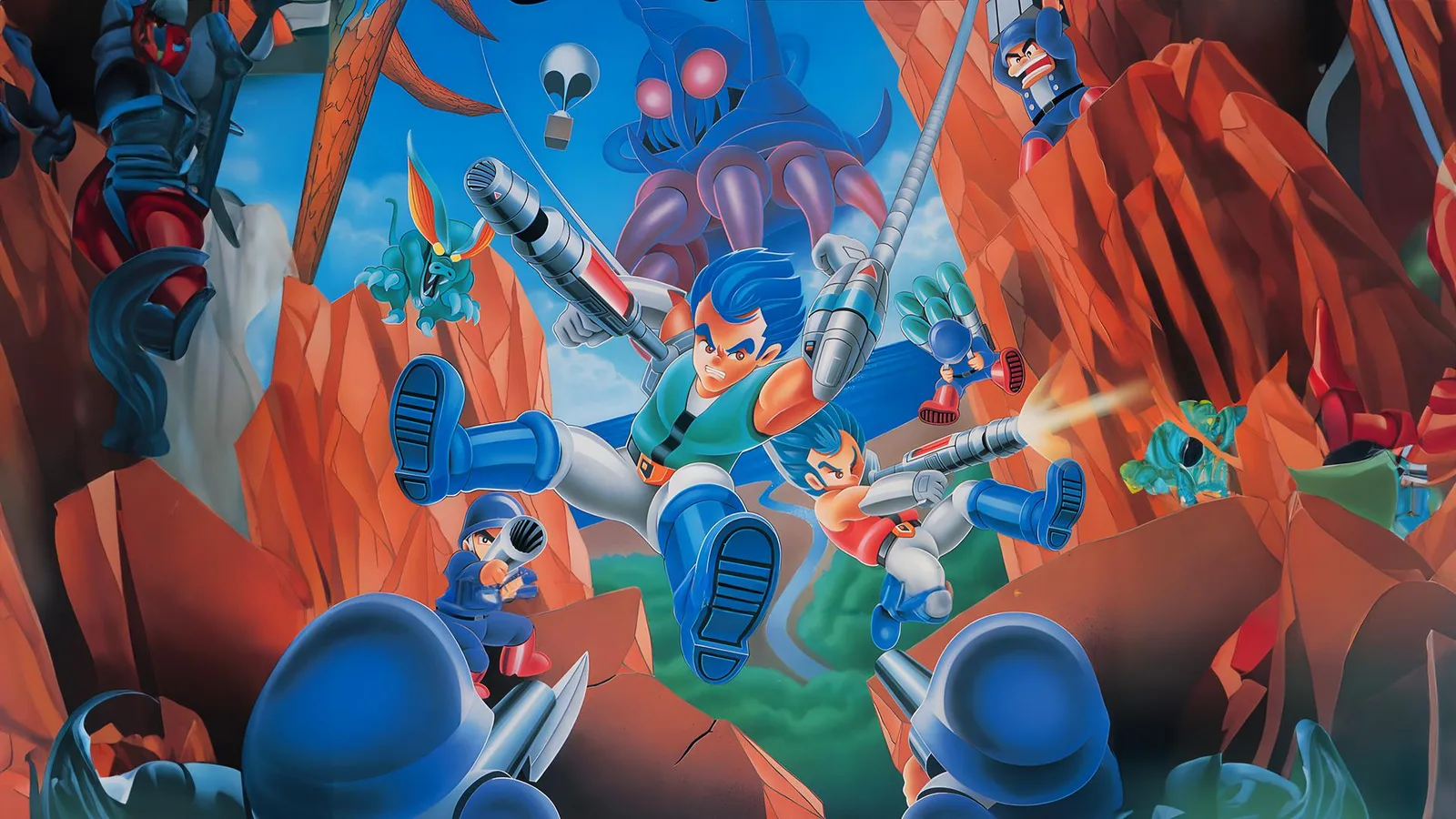

Bionic Commando
A commando who cannot jump: his bionic grappling arm replaces the jump. Tokuro Fujiwara's arcade game invents a way of getting around.
 Get the game
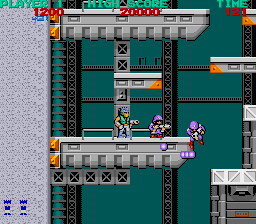
Bionic Commando
- Developer
- Capcom
- Publisher
- Capcom
- Release
- 1987
- System
- Arcade
- Players
- 1-2
- Genre
- Platforming and run and gun
The story of the game
The why and the how
Bionic Commando, called Top Secret in Japan, is a platform and run-and-gun game released in arcades in 1987, developed and published by Capcom. It is the first installment of the series of the same name. In the United States, it was presented as the sequel to Commando, to the point that the brochure named the hero Super Joe, whereas he remained anonymous in the Japanese and international versions. It was later ported to several home systems by Software Creations, at Go!.
How it was made
The game was designed by Tokuro Fujiwara, as the successor to Roc'n Rope, his 1983 rope-and-grapple game whose mechanics it reuses. He had also designed Commando. The music is composed by Harumi Fujita for the Yamaha YM2151 sound chip. Capcom later produced a NES version of the same name, very different from the cabinet.
What makes it unique
The hero is a commando equipped with a bionic arm with a grappling hook, which lets him pull himself forward or swing from the ceiling. Despite its genre, you cannot jump: to cross a gap or climb a ledge, you must use the arm. The story is set ten years after a world war, and the commando must infiltrate an enemy base to destroy the missile launch computer.
Good to know
Bionic Commando came out in March 1987, under the title Top Secret in Japan. The international version adds information on bonus lives, the player number and the weapon icon below the player's information. The scoring table is modified there, the end-of-level Clear Bonus and Time Bonus display faster, and the player keeps the previous level's weapon, which the Japanese version did not allow.
Text written from published sources (Wikipedia, Wikidata, specialist press).
The hardware
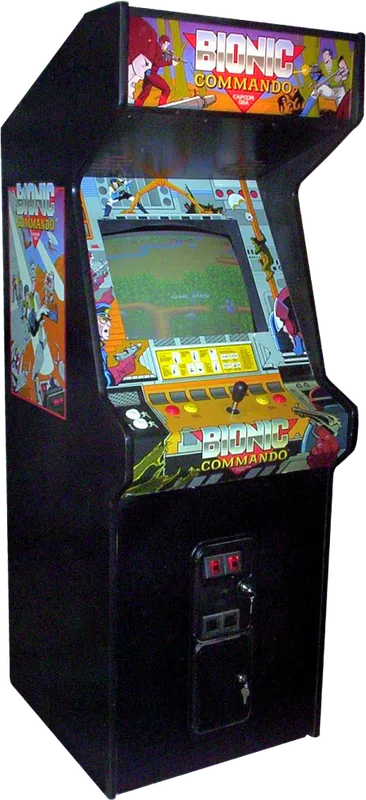
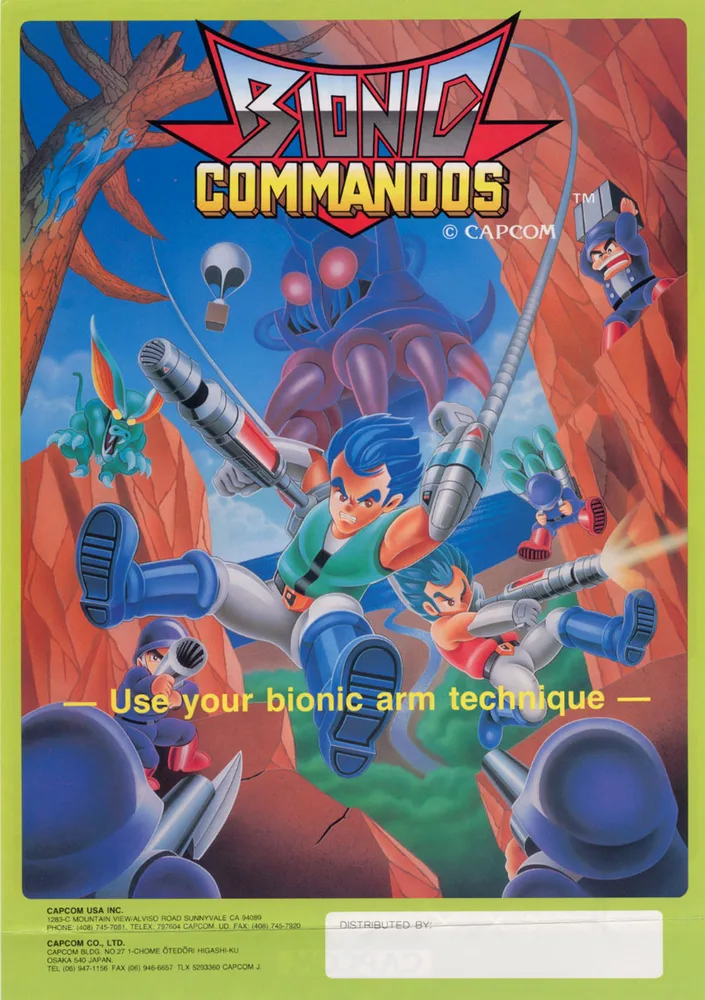
Texts and media: ScreenScraper.fr. Trademarks and visuals belong to their owners.