
Castlevania III: Dracula's Curse
An ambitious prequel: Trevor Belmont and three possible companions in a non-linear Castlevania, with a sound chip on the Japanese cartridge.
 Get the game
Castlevania III: Dracula's Curse
- Developer
- Konami
- Publisher
- Konami (Palcom en Europe)
- Release
- 1989
- System
- NES
- Players
- 1
- Genre
- Platformer
The story of the game
The why and the how
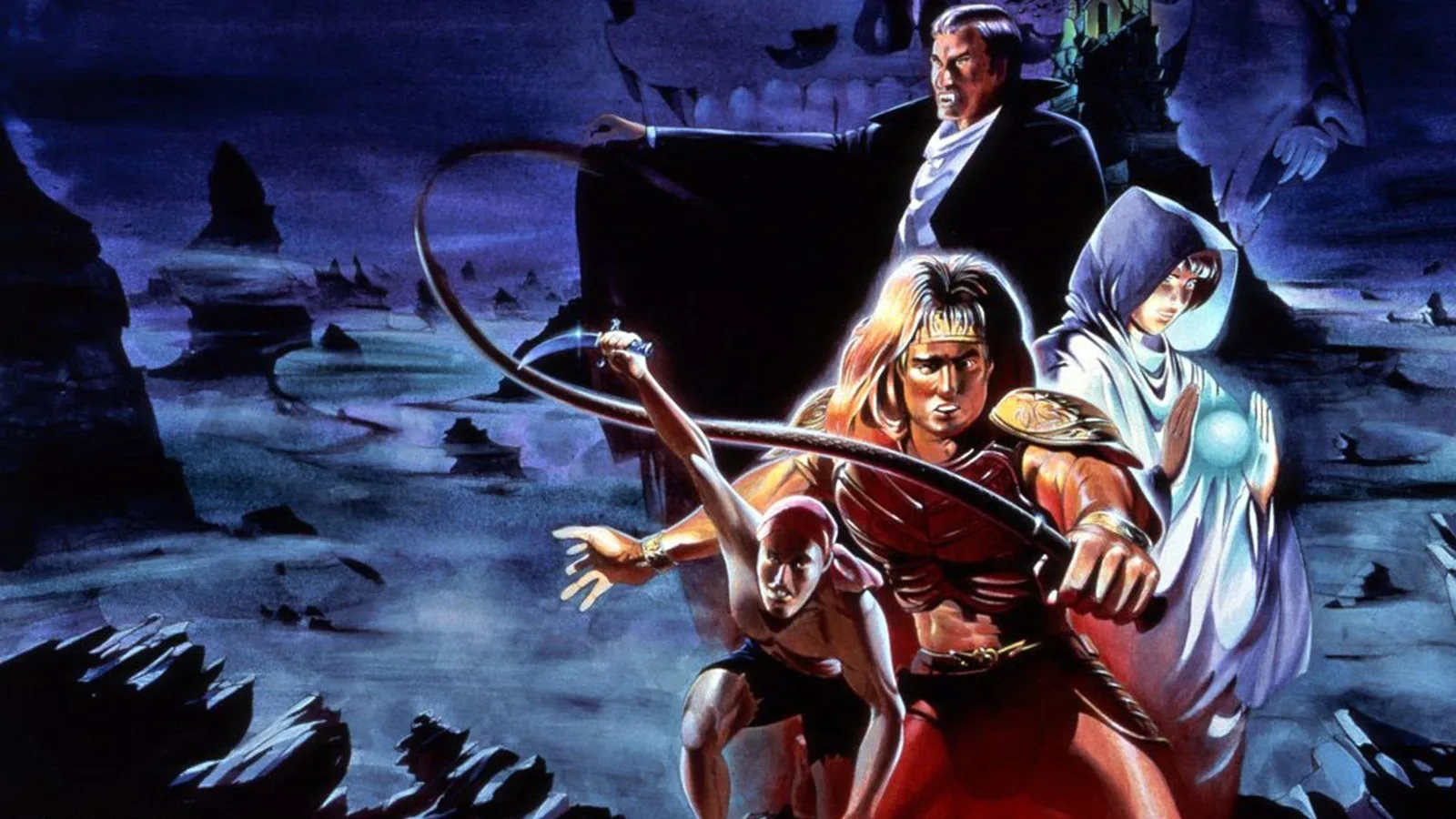
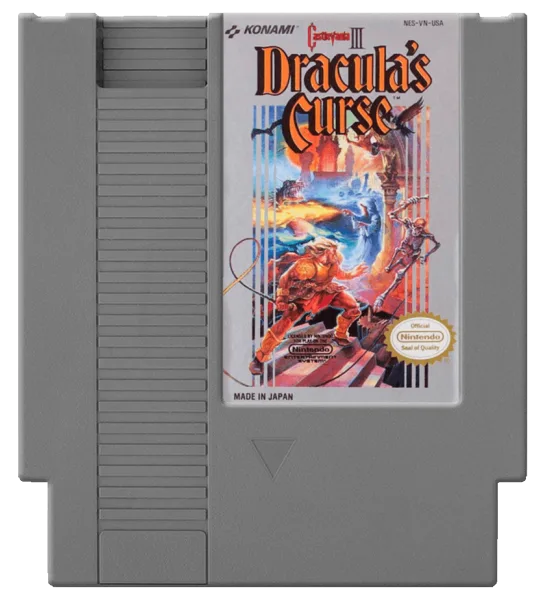
Castlevania III: Dracula's Curse is a 1989 platformer developed and published by Konami on NES. It came out in Japan on 22 December 1989, in North America on 19 September 1990 and in PAL regions in May 1992 from Palcom, Konami's publishing label. Although the third entry in the series, it is a prequel to the first Castlevania, set a few centuries earlier. The hero is Trevor Belmont, an ancestor of Simon.
How it was made
The Japanese version, named Akumajō Densetsu, differs in several respects. It contains a VRC6 chip that adds two square-wave channels and a sawtooth-wave channel to the console's original five channels, and audio programmer Hidenori Maezawa helped create it. Hitoshi Akamatsu directed, I. Urata designed, and Yasuo Okuda and Mitsuo Takemoto programmed.
What makes it unique
The game drops the role-playing and action-adventure elements of Castlevania II to return to the roots of the platformer. Unlike the first, it is non-linear: Trevor can be helped by one of three possible companions, and the route branches.
Good to know
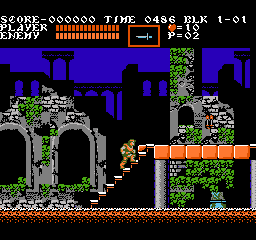
Sixteen stages, called blocks, offer two main routes of nine stages each, ten if you take the optional second stage, which lets you recruit one of the three companions. The high route crosses the lake to the main bridge and enters through the great gate of Dracula's castle, the low route goes through tunnels and caves before climbing the cliff. Several endings are possible depending on choices. The companion and the route are the two resources to decide from the start.
Text written from published sources (Wikipedia, Wikidata, specialist press).
The hardware
Texts and media: ScreenScraper.fr. Trademarks and visuals belong to their owners.