
Double Dragon II: The Revenge
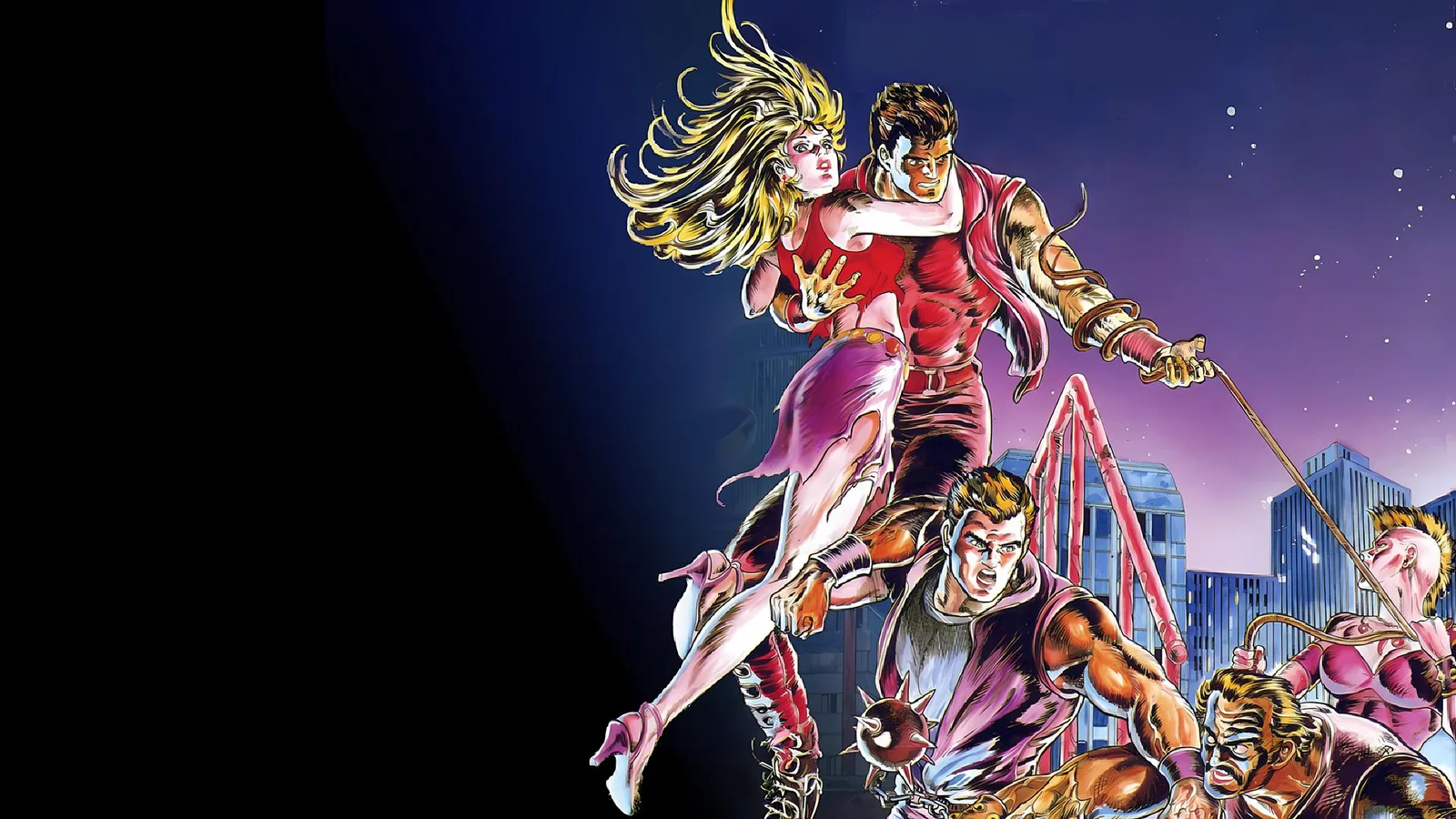
Billy and Jimmy Lee come to avenge Marian, with direction-based attacks and four missions leading to the Black Warriors' lair.
 Get the game
Double Dragon II: The Revenge
- Developer
- Technōs Japan
- Publisher
- Technōs Japan
- Release
- 1988
- System
- Arcade
- Players
- 1-2
- Genre
- Beat 'em up
The story of the game
The why and the how
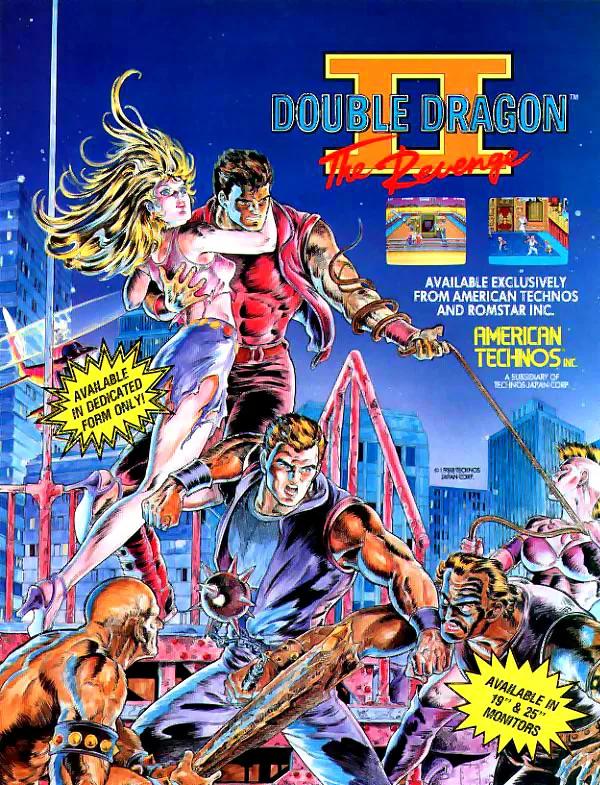
Double Dragon II: The Revenge came out in November 1988 in the United States, in December in Japan and in January 1989 in Europe. Technōs Japan developed and published it. It is the first sequel to Double Dragon, released the previous year. The story opens with the death of Marian, shot by Willy, leader of the Black Warriors, who is taking revenge for his defeat at the end of the first game. Billy and Jimmy Lee must avenge her.
How it was made
Yoshihisa Kishimoto is credited with the design and Kazunaka Yamane with the music. The game was first conceived as an upgrade kit for the first Double Dragon, but the increase in memory size turned it into a full game in its own right. The developers therefore reused elements common to both titles. A separate version of the same name came out on the NES, with different content.
What makes it unique
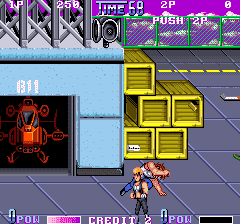
The arcade version is a refined first game. The main change is in the controls: the punch and kick buttons are replaced by two attack buttons depending on direction, as in Renegade. Pressing toward the side you are facing triggers punches, while pressing the other side gives a back kick. The cyclone kick makes its appearance. Four missions follow one another: a heliport, a lumber warehouse, a farm and the gang's new lair.
Good to know
Each mission ends with a boss, with one or more sub-bosses along the way. The enemies return from the first game in a reworked look, with new attacks and weapons such as shovels, knives, chain whips and grenades. You can also pick up and throw crates, logs and steel balls. Mastering these weapons, and the role of each opponent, earns points and health.
Its influence
Double Dragon II extended the series after the success of the first game, with ports to the Amiga, Amstrad CPC, Atari ST, Commodore 64, ZX Spectrum, IBM PC and Mega Drive. The game then found itself in the line of arcade sequels that made Double Dragon a benchmark name in the beat 'em up. Its NES version, which is different, remained another way to discover its story.
Text written from published sources (Wikipedia, Wikidata, specialist press).
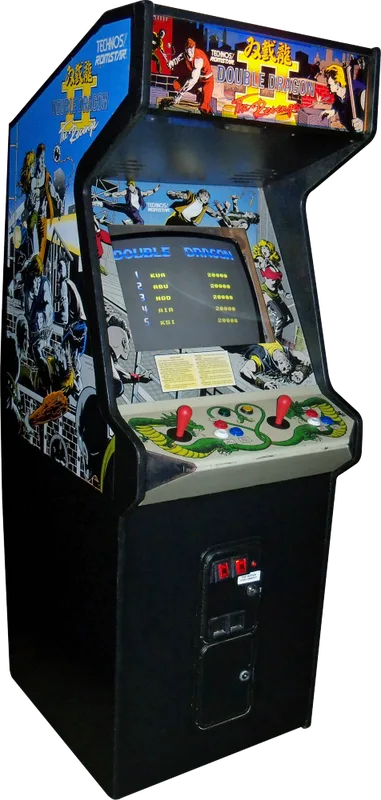
The hardware
Texts and media: ScreenScraper.fr. Trademarks and visuals belong to their owners.