
Final Fight
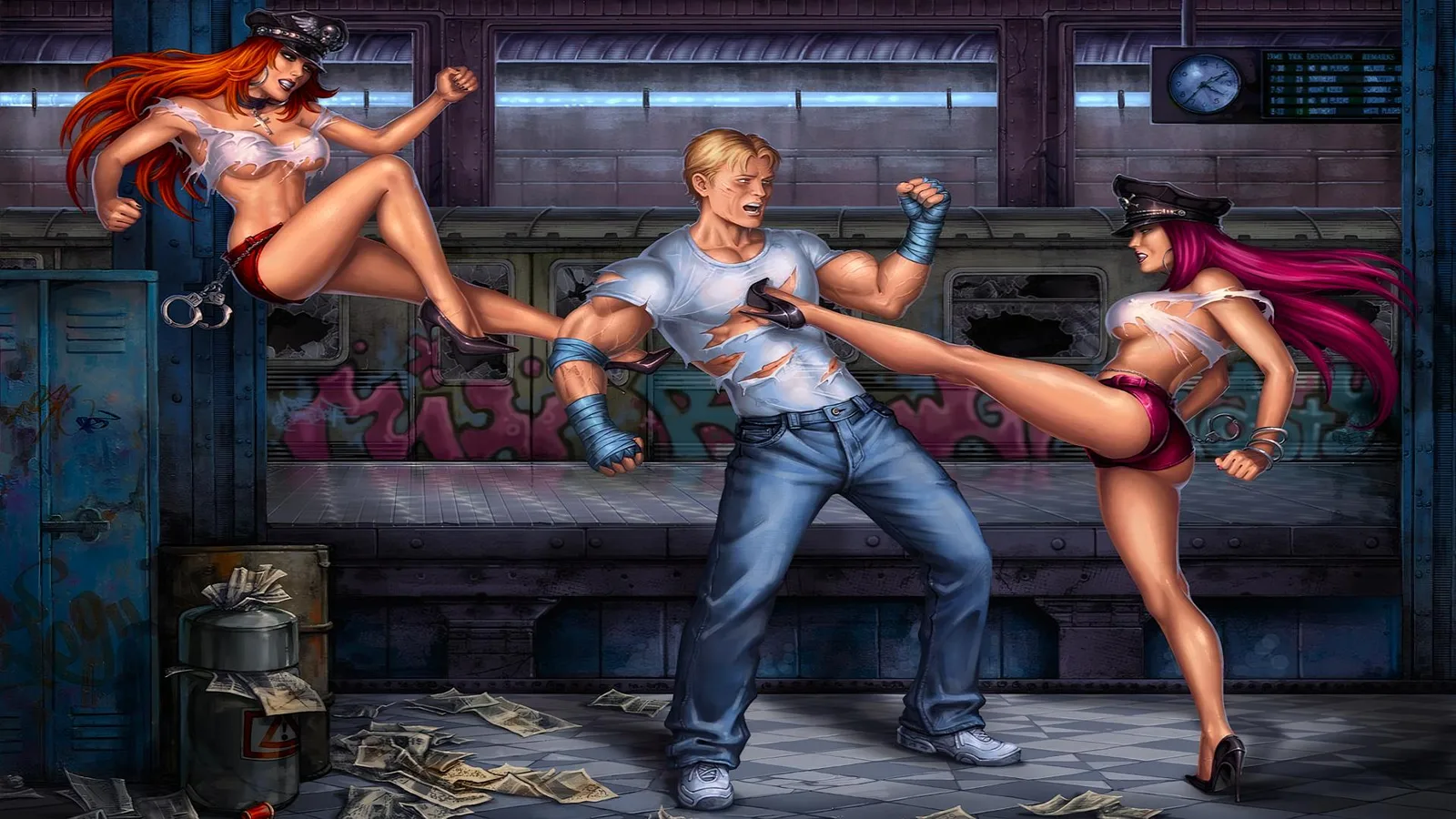
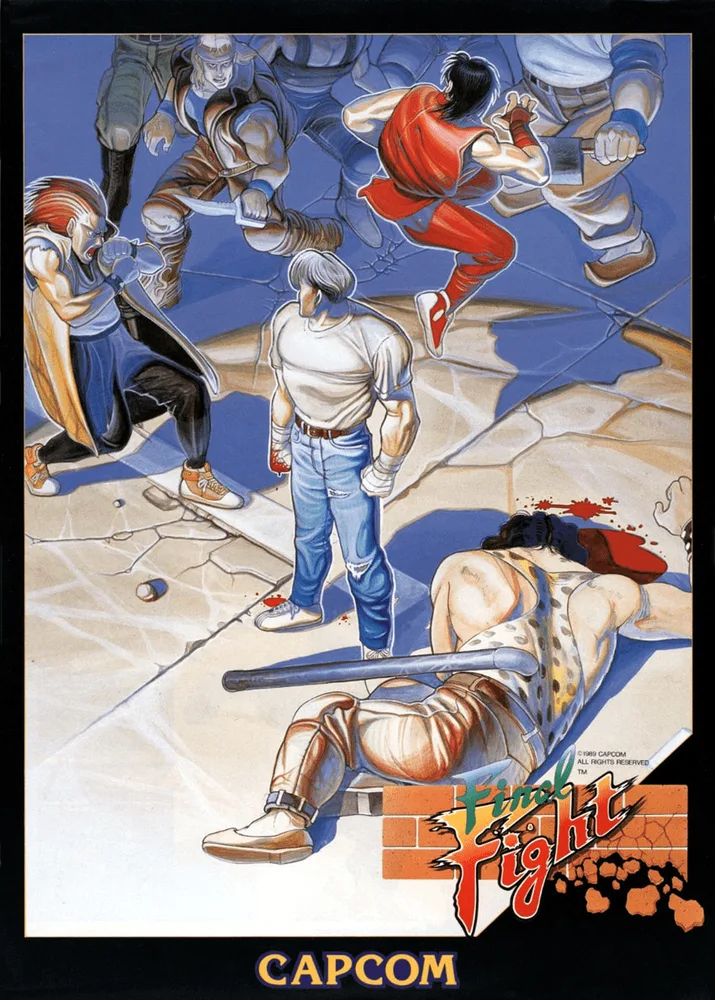
Haggar, Cody and Guy against the Mad Gear gang in the streets of Metro City: the Capcom beat'em up that gave the genre its credentials. To be rediscovered with two players, and with its famous continue screen under dynamite.
 Certified scoring
 Get the game
Final Fight
- Developer
- Capcom
- Publisher
- Capcom
- Release
- 1989
- System
- Arcade
- Players
- 1-2
- Genre
- Beat'em up
The story of the game
The why and the how
Final Fight is a Capcom beat'em up released in arcades in 1989, the seventh title on the CP System board. It began its life as a sequel to the first Street Fighter, under the working title Street Fighter '89, before changing genre and then name after the success of Technōs Japan's Double Dragon. A big hit, it sold 30,000 cabinets worldwide and was the most profitable arcade game of 1990 in Japan. The Super NES version exceeded 1.5 million cartridges.
How it was made
The game was designed by Akira Nishitani and produced by Yoshiki Okamoto, who cites Double Dragon II as a starting point. Capcom's president wanted it developed like a film and had the team watch several feature films. The Mad Gear gang owes its name to a Capcom racing game, and several enemies bear the names of 1980s rockers, such as Axl, Slash, Sid or Poison. Hugo is inspired by André the Giant. The music brings together seven composers, including Manami Matsumae and Yoko Shimomura, while only Yoshihiro Sakaguchi is credited in the game.
What makes it unique
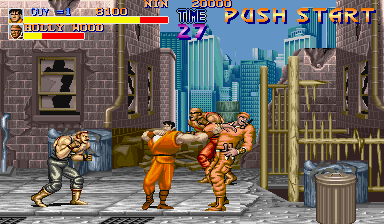
Up to two players choose between Mike Haggar, a former wrestler turned mayor, Cody Travers, an outstanding brawler, and Guy, a modern ninja, to save Jessica, Haggar's daughter kidnapped by the gang. Each has a specialty: Cody strikes in bursts with a knife he finds, Guy bounces off walls, Haggar chains a spinning throw. Six levels, two bonus stages and a boss each time lead to Belger, the gang's leader. Barrels and trash cans hide weapons and food.
Good to know
Breaking the scenery turns up items that give bonus points, in addition to the weapons and food that restore life. Each level has a time limit, and a life is lost when health or the timer reaches zero. After the last life, you can spend a credit to continue and even change character. The famous continue screen shows the hero tied to a chair in front of a stick of dynamite, with ten seconds to cut the fuse.
Its influence
Final Fight gave rise to a series, with Final Fight 2 in 1993 and Final Fight 3 in 1995 on Super NES. Its team then worked on Street Fighter II. Its heroes crossed over into the flagship series: Guy and Sodom in Street Fighter Alpha, Rolento in Alpha 2, Cody in Alpha 3. Haggar also joined Saturday Night Slam Masters and Marvel vs. Capcom 3. Ported to ZX Spectrum, Super NES and Sega CD, the game is today considered among the greatest in history.
Text written from published sources (Wikipedia, Wikidata, specialist press).
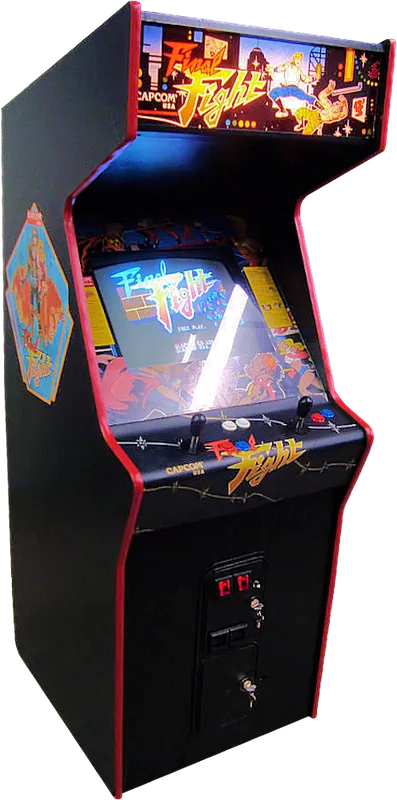
The hardware
Texts and media: ScreenScraper.fr. Trademarks and visuals belong to their owners.