
Guerrilla War
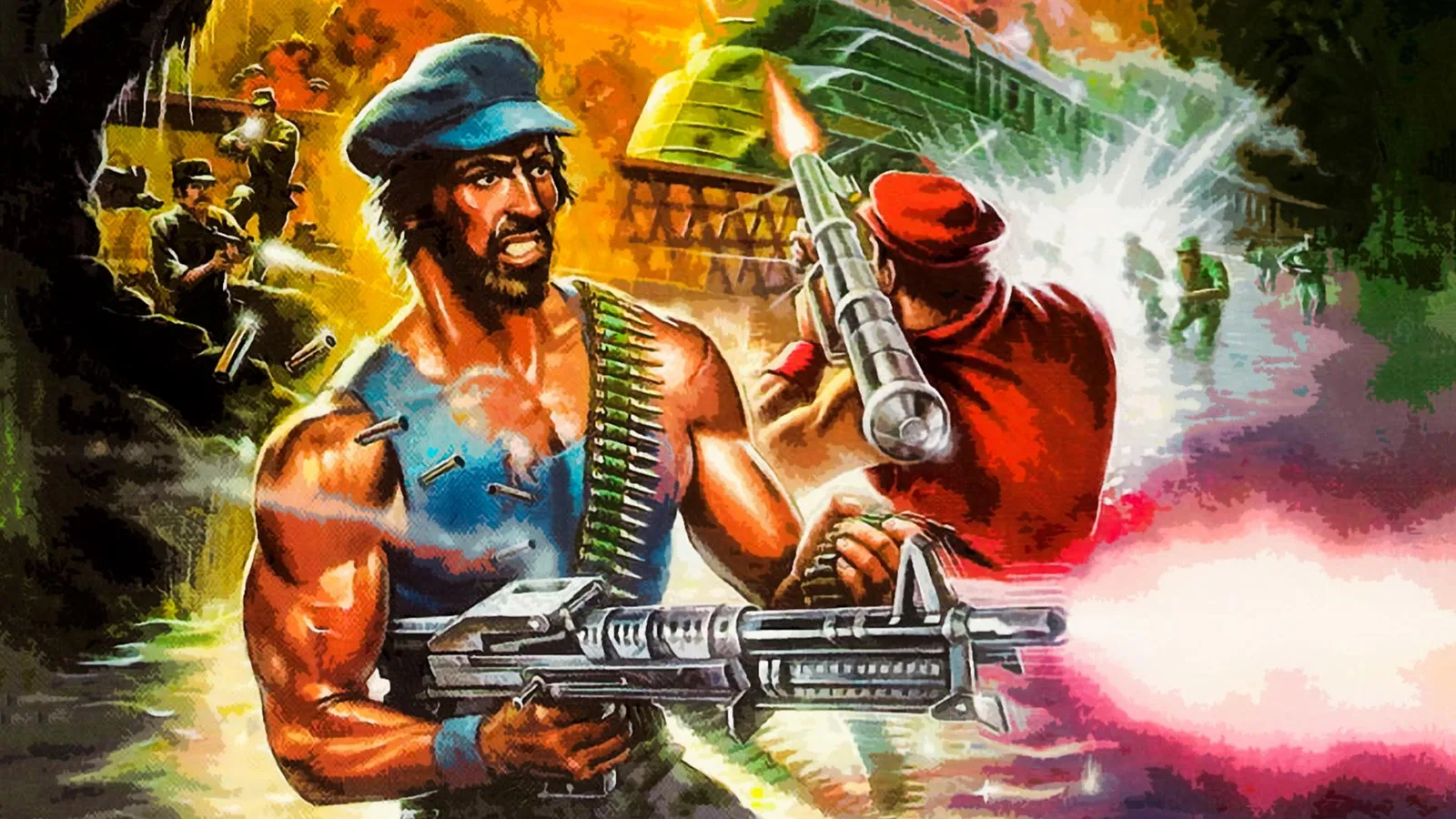
Two commandos to free a Caribbean island: a run and gun released as Guevara in Japan, in the vein of Ikari Warriors.
 Get the game
Guerrilla War
- Developer
- SNK
- Publisher
- SNK
- Release
- 1987
- System
- Arcade
- Players
- 1-2
- Genre
- Run and gun
The story of the game
The why and the how
Guerrilla War, known in Japan as Guevara, came out in arcades in December 1987, developed and published by SNK. It follows the formula of Ikari Warriors, released a year earlier, with its eight-direction rotary joysticks that let you advance one way and shoot another. The game had moderate success and was ported to Amstrad CPC, Commodore 64, MS-DOS, NES and ZX Spectrum. The arcade and console versions appear in the SNK 40th Anniversary Collection, and Hamster brought it back in Arcade Archives in March 2021.
How it was made
The Japanese title comes from the game's inspiration: the exploits of Che Guevara and the fall of Batista's regime in Cuba in the late 1950s. In the Japanese version, the two commandos are Che Guevara and Fidel Castro. Fearing anti-communist sentiment in the West, SNK adapted the dialogue and manual for North America and Europe, where the heroes remain anonymous. At the helm were director Koji Obata, producer Eikichi Kawasaki and programmer Yukio Kaneda.
What makes it unique
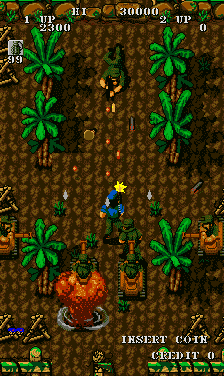
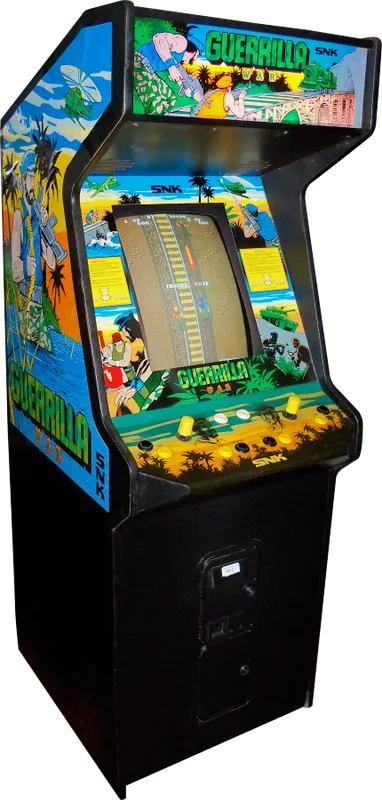
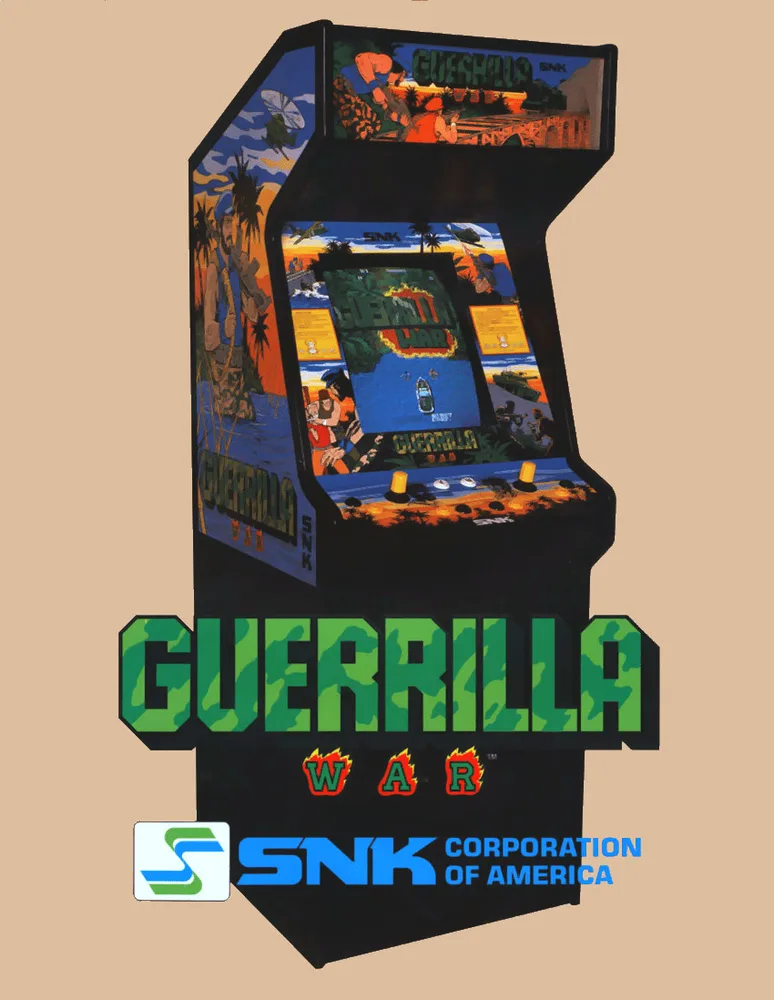
Two rebels land on a Caribbean island to free it from a dictator. You shoot down hordes of soldiers, free hostages, pick up enemy weapons and take the controls of tanks. The arcade's rotary joysticks let you aim in one direction while advancing in another, as in Ikari Warriors. The computer and console versions, limited by their hardware, gave up these rotating controllers.
Good to know
Points come from soldiers shot down and hostages rescued, but the game punishes poorly controlled fire: killing a hostage in the crossfire causes a heavy score reduction. You therefore need to advance by clearing the screen precisely rather than spraying at random, especially when prisoners are close to enemies. A clean score is built by keeping your rescues intact.
Its influence
The NES version, playable by two at the same time and with unlimited continues, has aged much better than the arcade: a book on the NES library gave it five stars out of five. Its cover is by Marc Ericksen, who also illustrated Ikari Warriors III and P.O.W. The Japanese Famicom version, titled Guevara, is highly sought after by collectors.
Text written from published sources (Wikipedia, Wikidata, specialist press).
The hardware
Texts and media: ScreenScraper.fr. Trademarks and visuals belong to their owners.