
Marvel Super Heroes vs. Street Fighter
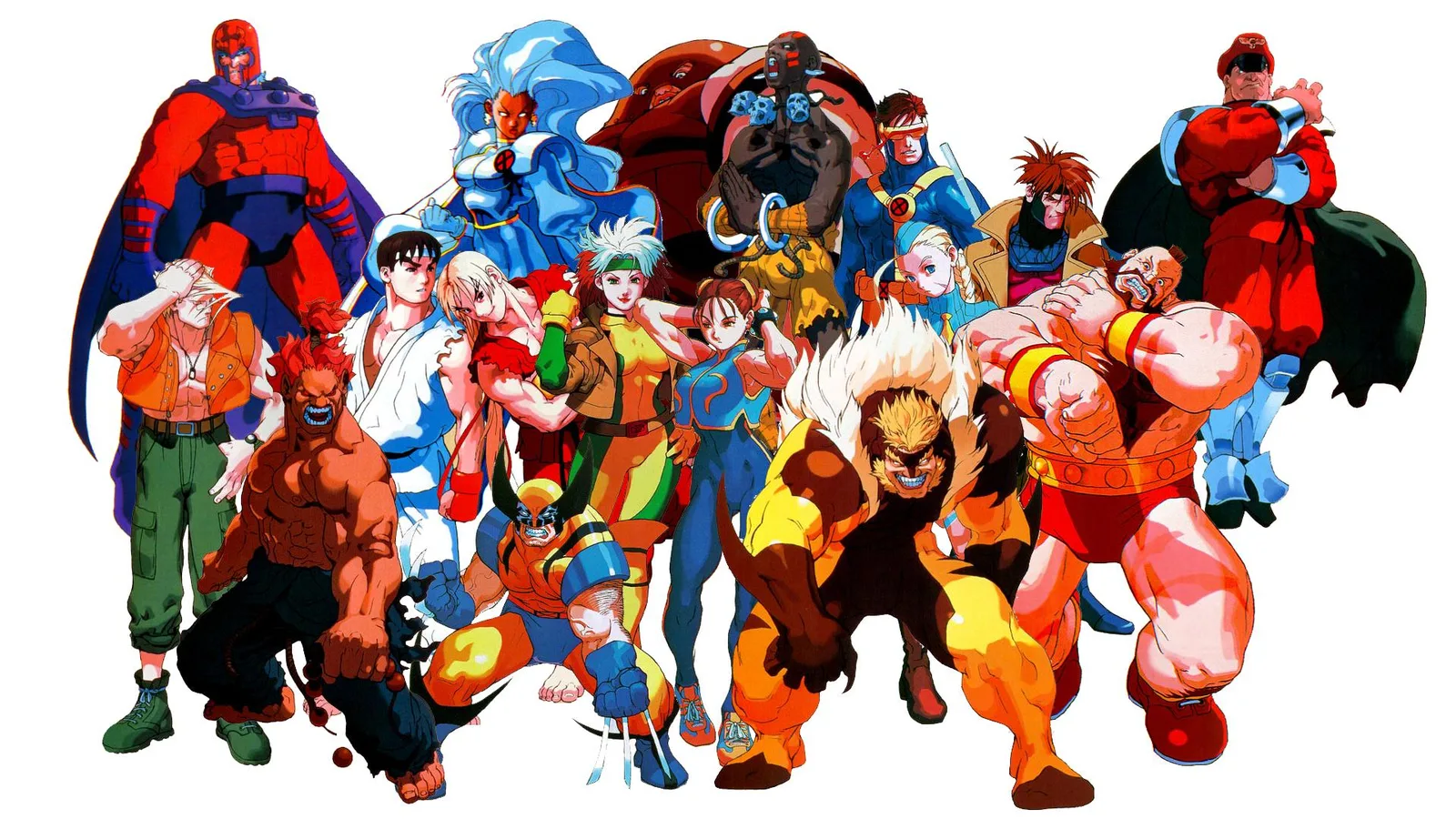
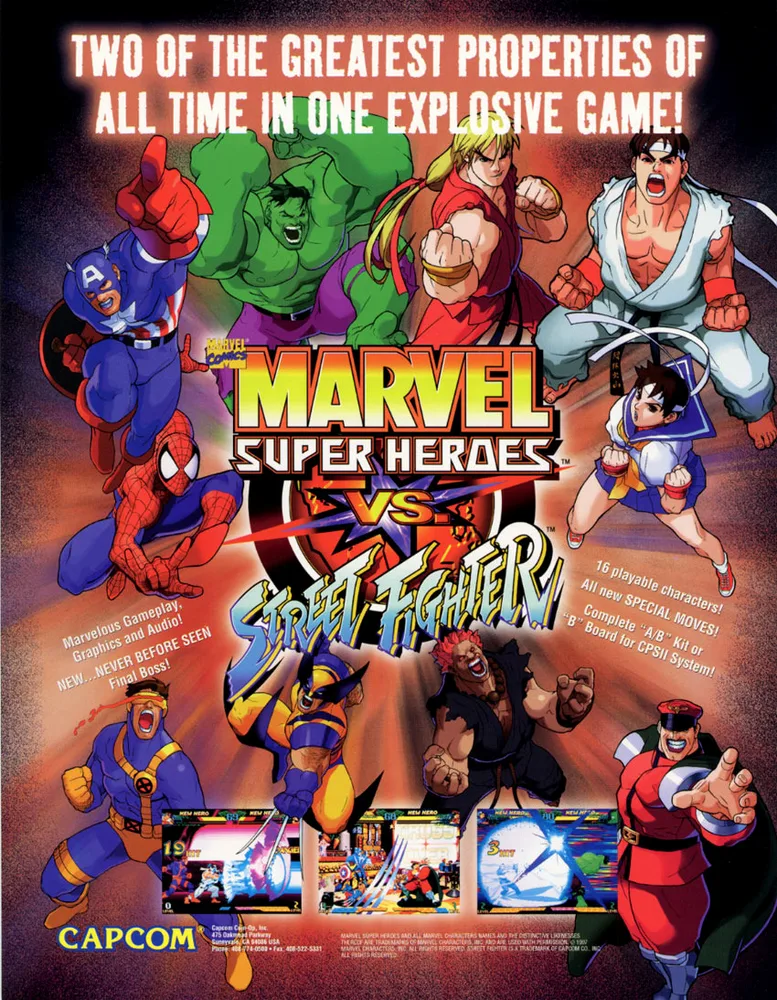
The sequel to X-Men vs. Street Fighter brings the Variable Assist and replaces most of the X-Men with other Marvel heroes. Less chaos, more balance, and a Japanese clown named Norimaro.
 Get the game
Marvel Super Heroes vs. Street Fighter
- Developer
- Capcom
- Publisher
- Capcom
- Release
- 1997
- System
- Arcade
- Players
- 1-2
- Genre
- Crossover fighting game
The story of the game
The why and the how
Marvel Super Heroes vs. Street Fighter is a crossover fighting game by Capcom released in arcades in 1997, in Japan and North America, on the CP System II board. It is the sequel to X-Men vs. Street Fighter and the second installment of the Marvel vs. Capcom series. The Saturn version, exclusive to Japan, came out on October 22, 1998 and uses the 4 MB memory expansion; the PlayStation version followed in 1999, without the team fight.
How it was made
According to Seth Killian, a former community manager at Capcom USA, one of the goals was to calm the on-screen madness compared with X-Men vs. Street Fighter. The developers also wanted to balance the cast, since the previous game had a reputation for being unbalanced. Kenji Kataoka produces the game. The Variable Assist, the big novelty, would become a signature element of the following installments.
What makes it unique
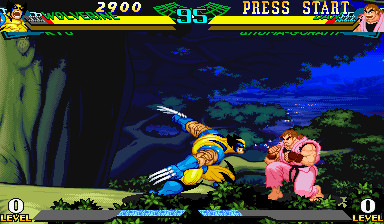
Each player forms a team of two fighters, each with their own life gauge; the first is controlled while the second waits off-screen. With the Variable Assist, you call your partner to perform a special move without switching characters, which opens up new combos. Seventeen fighters are playable, nine from Street Fighter and eight from Marvel, including Captain America, Spider-Man and Hulk. The Japanese game adds Norimaro, a character based on the comedian Noritake Kinashi.
Good to know
In Arcade mode, you face computer-led teams, before a penultimate fight against Apocalypse, then a final boss, Cyber-Akuma. Versus mode is played by two. The PlayStation version adds Training, Hero Battle, an endurance mode, and Cross Over, which restores team play. Score therefore depends on managing assists and combos to defeat the two bosses.
Its influence
The game was praised for its gameplay, sprite animation and cast. It was followed by Marvel vs. Capcom: Clash of Super Heroes in 1998. In June 2020, it was included in an Arcade1Up cabinet with X-Men vs. Street Fighter, then in September 2024 in the Marvel vs. Capcom Fighting Collection: Arcade Classics, where Norimaro became playable outside Japan for the first time.
Text written from published sources (Wikipedia, Wikidata, specialist press).
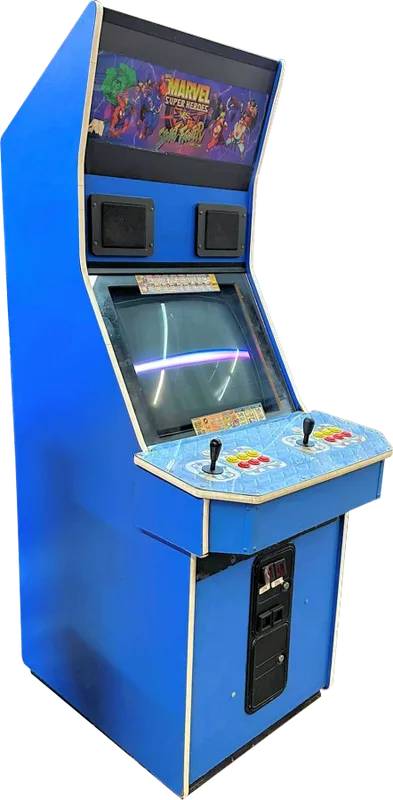
The hardware
Texts and media: ScreenScraper.fr. Trademarks and visuals belong to their owners.