
Marvel vs. Capcom 2: New Age of Heroes
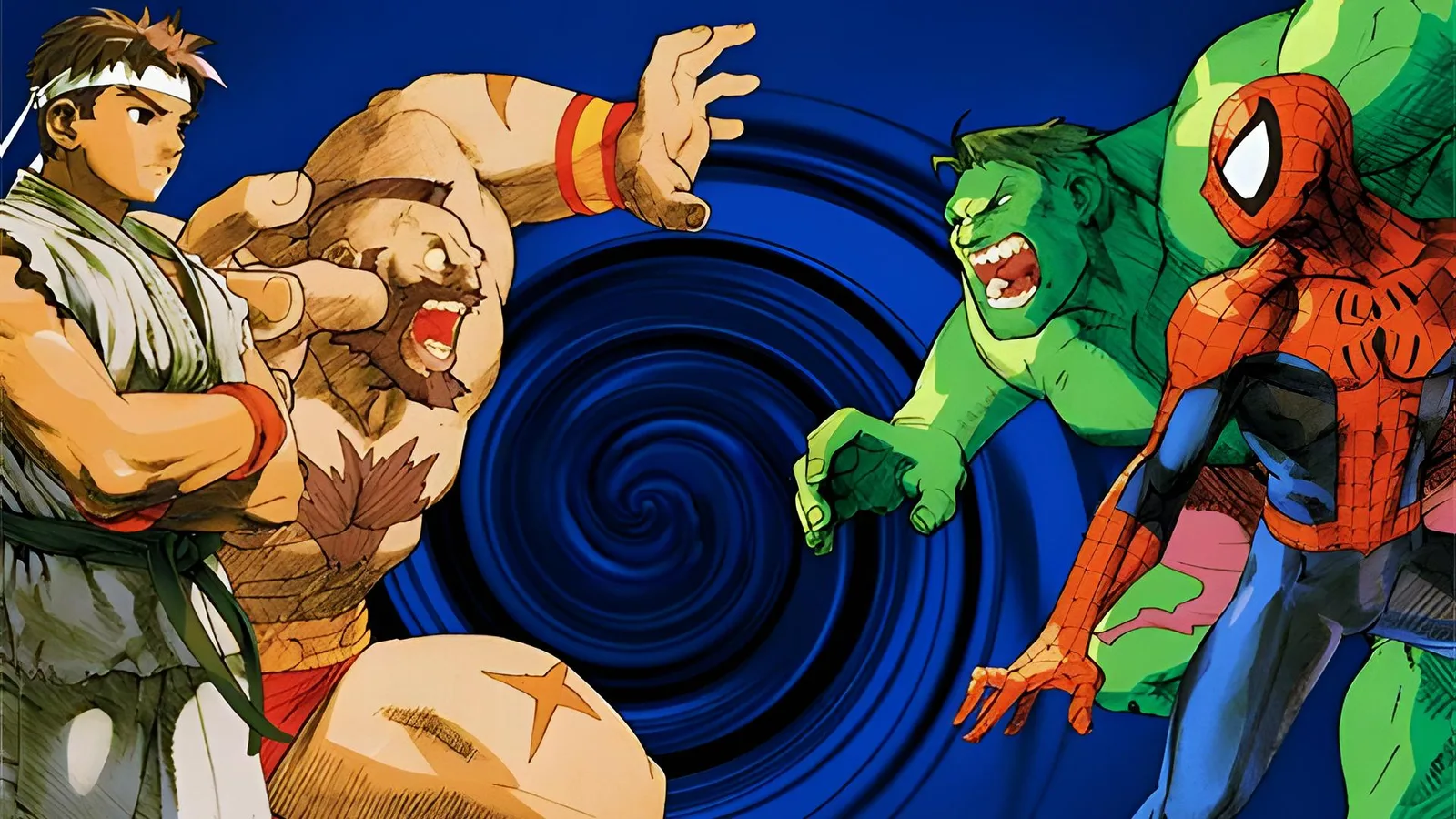
Fifty-six fighters, teams of three and 3D backdrops behind hand-drawn sprites. The pinnacle of the Marvel and Capcom clashes, before ten years of silence.
 Get the game
Marvel vs. Capcom 2: New Age of Heroes
- Developer
- Capcom
- Publisher
- Capcom
- Release
- 2000
- System
- Arcade
- Players
- 1-2
- Genre
- Crossover fighting game
The story of the game
The why and the how
Marvel vs. Capcom 2: New Age of Heroes is a Capcom crossover fighting game released in arcades in 2000, the fourth installment of the Marvel vs. Capcom series. It came to Dreamcast in 2000, PlayStation 2 and Xbox in 2002, Xbox 360 and PlayStation 3 in 2009 and iOS in 2012. Acclaimed by critics, it is considered one of the greatest fighting games. Capcom later lost the Marvel license, and the series went on a decade-long pause until Marvel vs. Capcom 3 in 2011.
How it was made
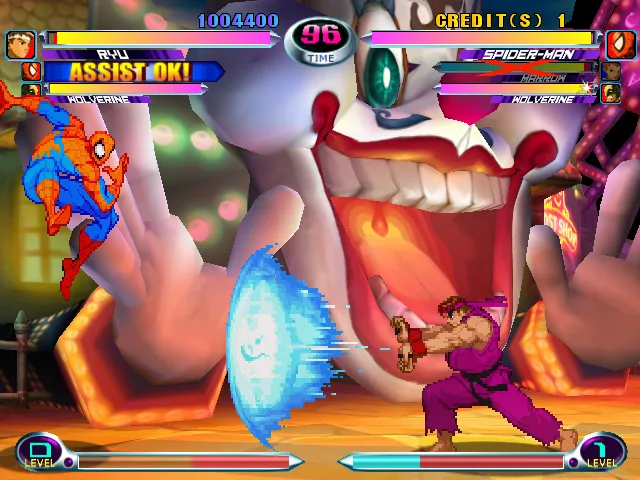
On 1 December 1999, Capcom announced the sequel to Clash of Super Heroes, developed for the Sega NAOMI board and the Dreamcast, the studio's first attempt outside the CP System II and III boards. It is the first game in the series to combine hand-drawn sprites and 3D backdrops. For the 2009 version, Capcom emphasized that it was its most requested title from fans. Yoshihiro Sudou produces the game and Tetsuya Shibata composes the music.
What makes it unique
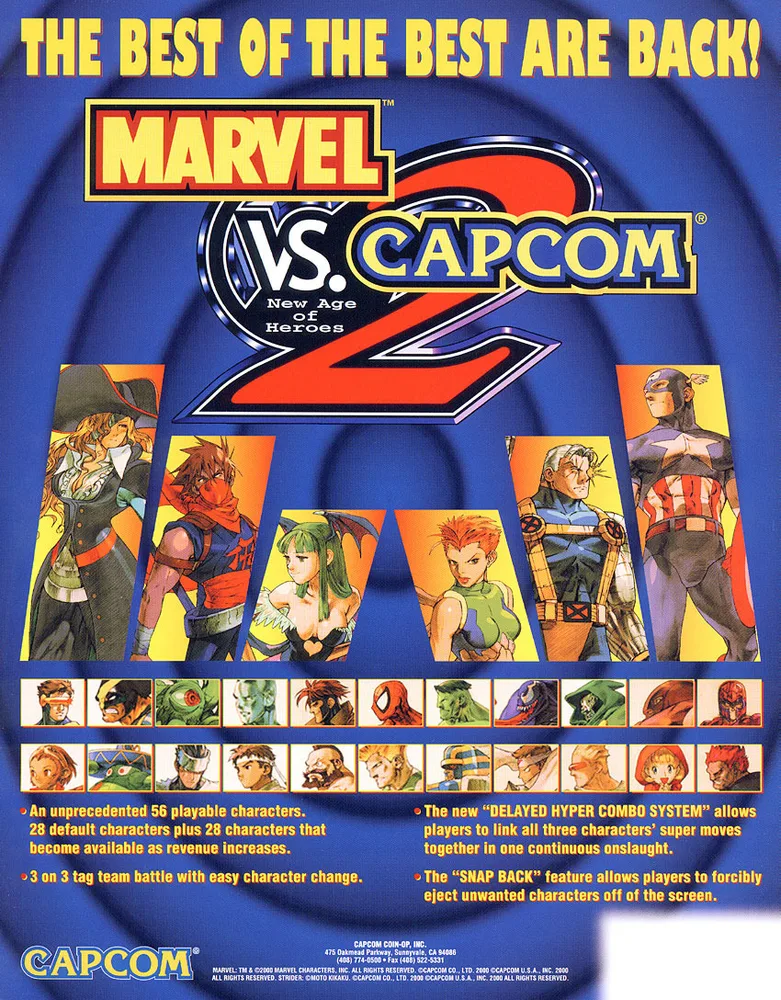
Each player forms a team of three characters instead of two, and can call them at any time through a more refined tag system. Attacks chain through a Hyper Combo Gauge: hyper combos, delayed hyper combos and variable combinations, which summon the whole team at once. The "snapback" forces the opponent to switch characters. The cast has 56 Marvel and Capcom fighters, including three creations: Amingo, Ruby Heart and SonSon.
Good to know
In Arcade mode, you must defeat seven teams before reaching the final boss, Abyss, who has three forms. The game has no ending specific to each character; the outcome is the same whatever the team. In the arcade, an experience system unlocks hidden characters as points are earned, while on console a "Secret Factor" menu lets you buy them with game points.
Its influence
The Xbox 360 and PlayStation 3 versions, developed by Backbone Entertainment, offer online play with ranked matches and lobbies. On Dreamcast, the Japanese version already allowed online play through Capcom's Match Service network. The game was praised for its mechanics, visuals and cast, but criticized for its soundtrack, the initial lack of online play outside Japan and its balance.
Text written from published sources (Wikipedia, Wikidata, specialist press).
The hardware
Texts and media: ScreenScraper.fr. Trademarks and visuals belong to their owners.