
Marvel vs. Capcom: Clash of Super Heroes
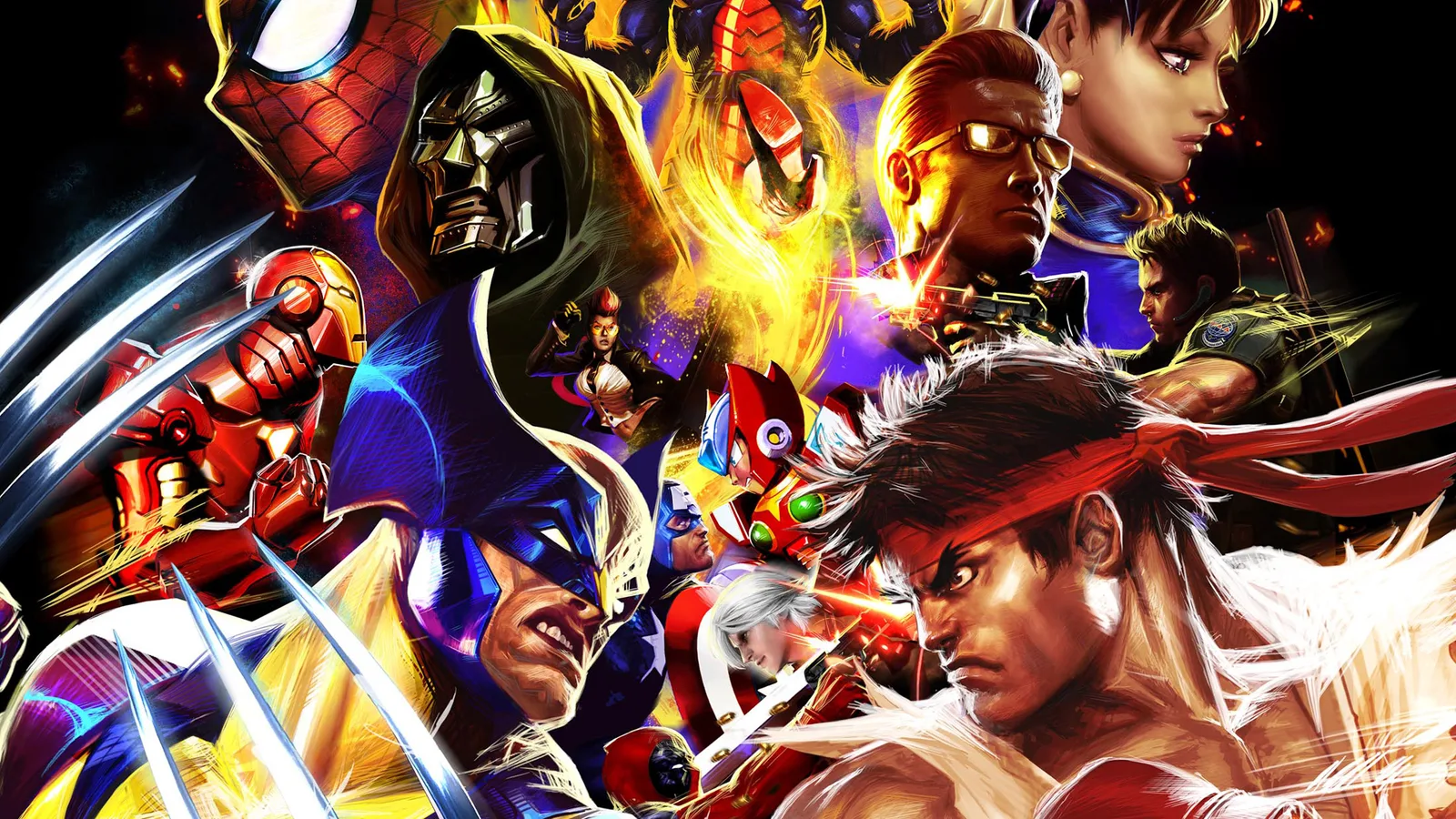
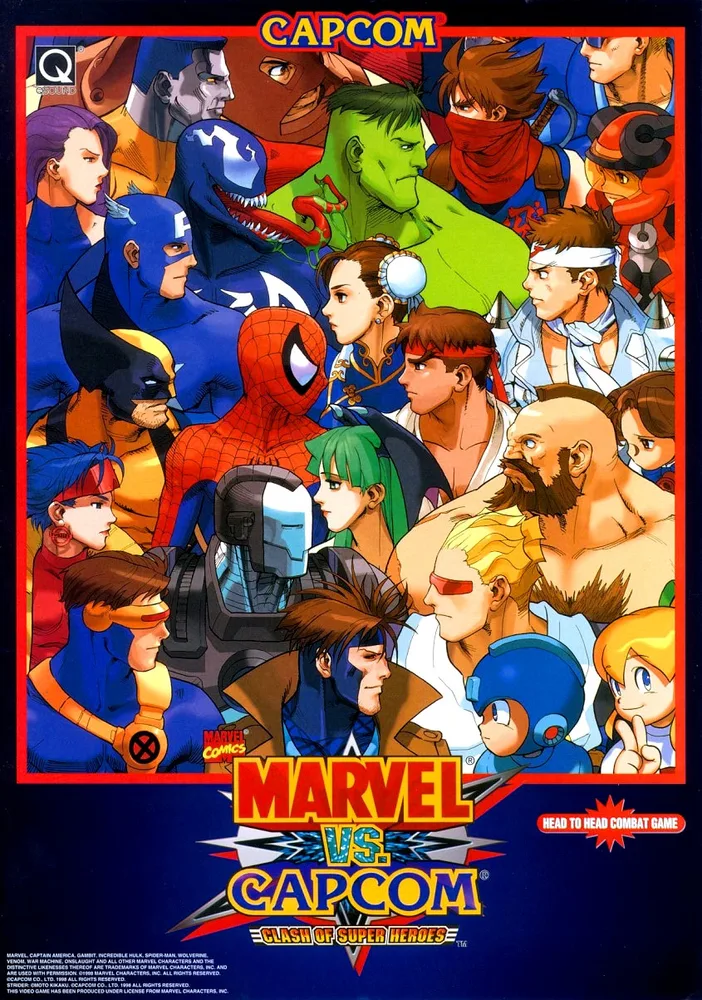
Spider-Man against Ryu, Captain America against Mega Man: Capcom and Marvel's great crossover in two-on-two fights. An overcharged arcade game, with its guest partners and its chain of Hyper Combos.
 Get the game
Marvel vs. Capcom: Clash of Super Heroes
- Developer
- Capcom
- Publisher
- Capcom
- Release
- 1998
- System
- Arcade
- Players
- 1-2
- Genre
- Crossover fighting game
The story of the game
The why and the how
Marvel vs. Capcom: Clash of Super Heroes is a crossover fighting game developed and published by Capcom for the CP System II board. Presented at the AOU Show in February 1998, it came out the same month in Japanese arcades, then in North America in March. It is the third installment of the Marvel vs. Capcom series. Unlike Marvel Super Heroes vs. Street Fighter, which was limited to Street Fighter, it draws on many Capcom licenses, such as Darkstalkers, Mega Man and Strider.
How it was made
Kenji Kataoka produces this third installment of the series, whose Capcom characters are no longer limited to Street Fighter. Design is entrusted to Atsushi Tomita, Nakano Tau Masahiro and Yuji Matsumoto, the original illustrations to Akira Yasuda, and the music to Masato Kouda and Yuko Takehara. The game is shown at the AOU Show in February 1998, then released in Japanese arcades the same month. Its final opponent, Onslaught, comes from the storyline that ran across all the Marvel series a year earlier. On Dreamcast, the Cross Fever mode allows four-player play.
What makes it unique
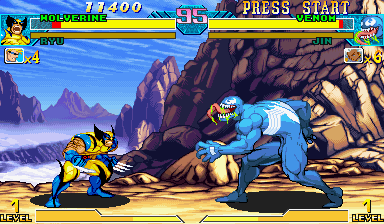
You choose a team of two fighters and can swap at any moment: while one fights, his partner, off screen, gradually recovers life. The game drops the variable assist of the previous episode in favor of a guest partner system, drawn at random and usable a few times per round. It introduces the Variable Cross, or team attack, which lets you strike with both characters at once for a limited time. The roster counts fifteen fighters, six secrets and twenty-two partners, including Arthur from Ghosts 'n Goblins.
Good to know
Each side fields two fighters and you can swap at any time, knowing that the partner left off screen slowly recovers health. If time runs out, the team with the most energy wins. A guest partner, drawn at random at the start of the match, answers only a small number of times per round. The Variable Cross sends both fighters on the attack at the same time for a limited period, with unlimited use of the hyper combo gauge, which then chains several devastating blows. Outside that moment, a hyper combo costs one gauge level.
Its influence
The game moved to Dreamcast in 1999 with a Cross Fever mode that allows four-player games. The Dreamcast version was praised for its visuals and faithfulness to the arcade. On PlayStation, a lack of memory forced the removal of team play, replaced by Cross Over mode. It returned in 2012 in Marvel vs. Capcom Origins on PlayStation 3 and Xbox 360 with online play, became an Arcade1Up cabinet in 2020, then joined the Marvel vs. Capcom Fighting Collection: Arcade Classics compilation in 2024.
Text written from published sources (Wikipedia, Wikidata, specialist press).
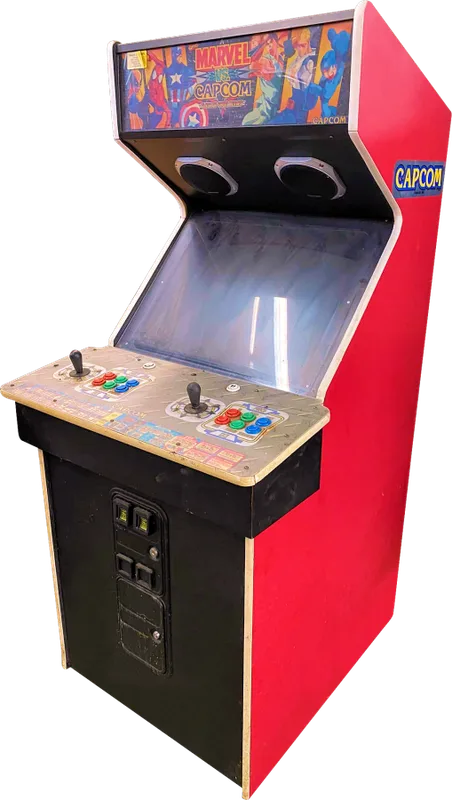
The hardware
Texts and media: ScreenScraper.fr. Trademarks and visuals belong to their owners.