
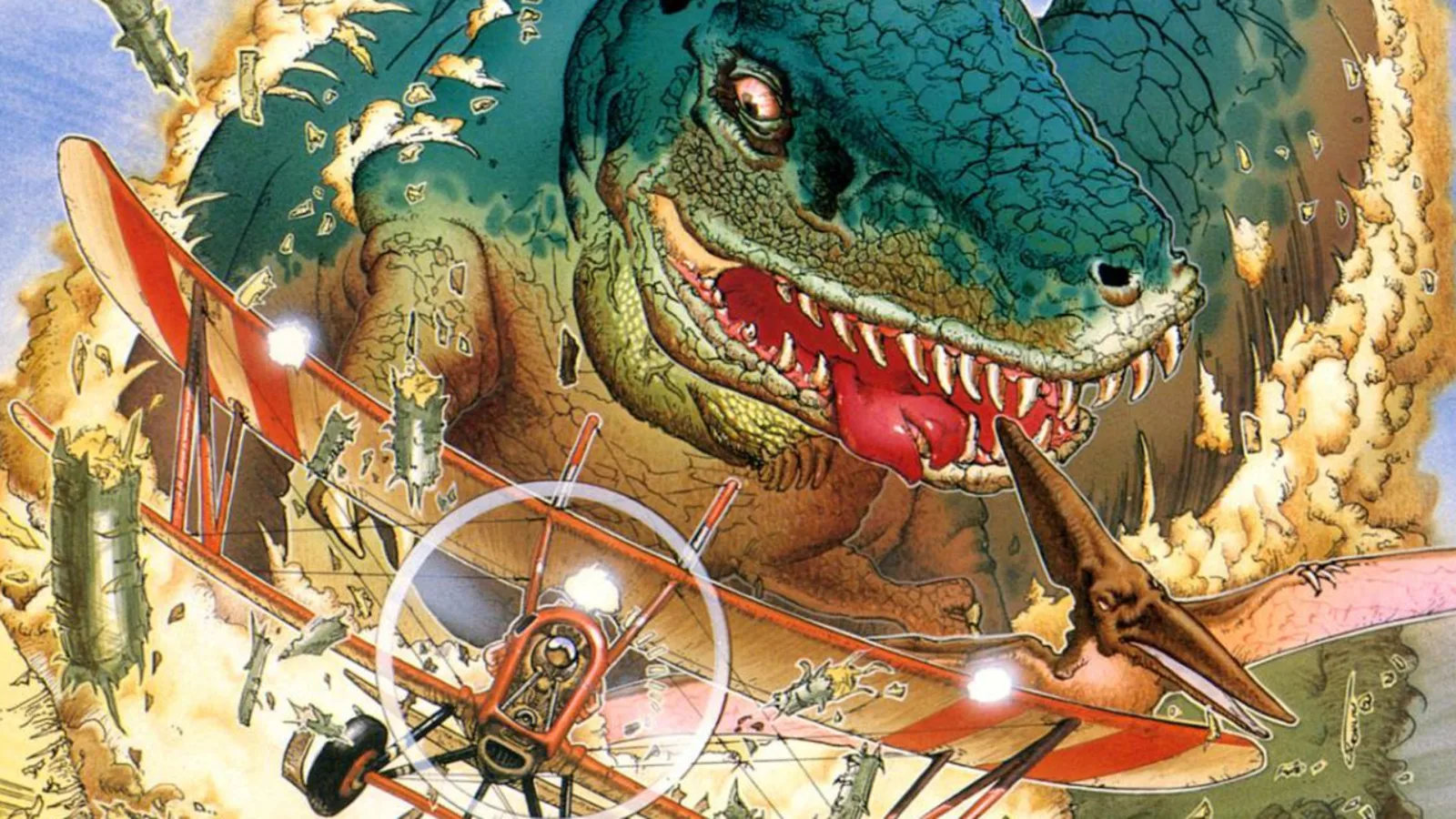

Prehistoric Isle in 1930
American biplanes exploring an island full of dinosaurs: a 1989 SNK shoot'em up in the spirit of R-Type.
 Get the game
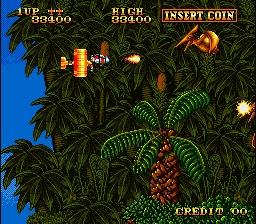
Prehistoric Isle in 1930
- Developer
- SNK
- Publisher
- SNK
- Release
- 1989
- System
- Arcade
- Players
- 1-2
- Genre
- Scrolling shoot'em up
The story of the game
The why and the how
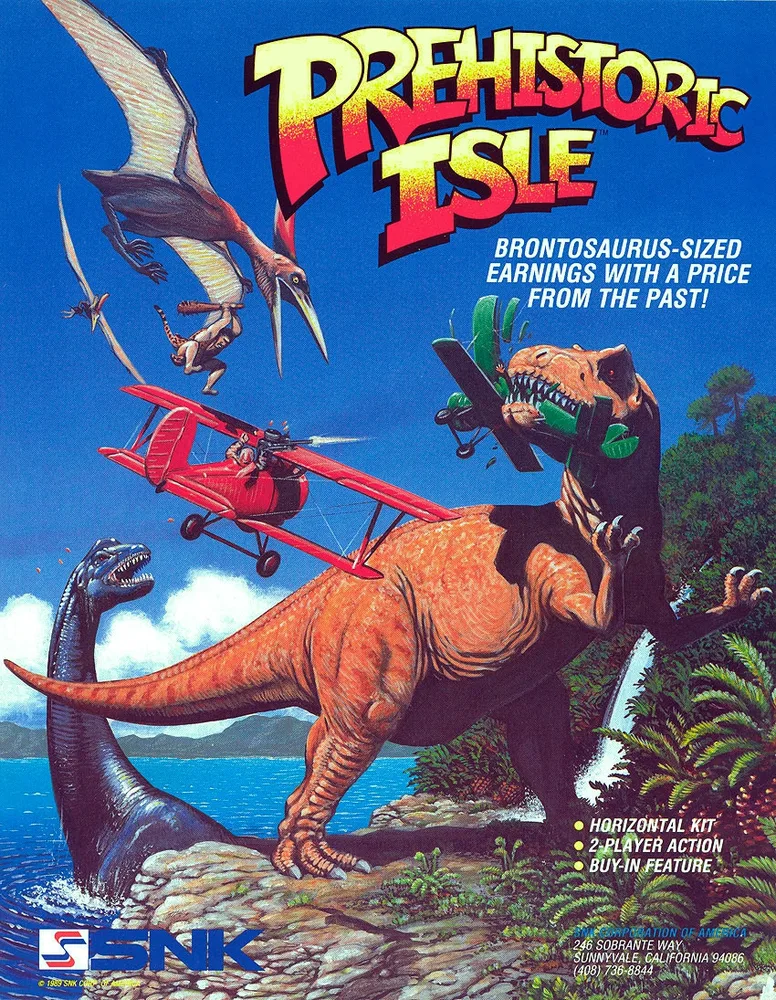
Prehistoric Isle, released in arcades in 1989 and developed and published by SNK, is a scrolling shoot'em up reminiscent of R-Type. The story is set in the 1930s: ships are mysteriously disappearing in the Bahamas, and American Marine pilots set out on reconnaissance by biplane to Greenhell Isle, an imaginary island where dinosaurs and creatures thought to be extinct live.
How it was made
The producer is Eikichi Kawasaki, and the music is by Toshikazu Tanaka and Yoko Osaka. The credits also list a director under the pseudonym Yah!, as well as designers, Hideki Fujiwara, Violetche Nakamoto and Tomomi M. The game borrows its scrolling and shooting from R-Type, but transposes them into a setting of biplanes.
What makes it unique
Players pilot biplanes through five stages of increasing difficulty on Greenhell Isle. The plane faces dinosaurs and other creatures in a scroll that recalls R-Type, with optional multiplayer. Each stage adds its share of prehistoric enemies, ever harder to dodge.
Good to know
The single starting weapon, a shot that carries the length of the screen, is enriched by picking up the P icon dropped by dinosaur eggs: a satellite, as in R-Type, that fires several types of weapons depending on its position. You also find speed-ups and dollar icons that give points. If the plane is hit by an enemy, a shot, or by Neanderthals clinging to it, you lose a life, but you restart with firepower reduced to its starting level. Keeping your satellite as long as possible makes all the difference.
Text written from published sources (Wikipedia, Wikidata, specialist press).
The hardware
Texts and media: ScreenScraper.fr. Trademarks and visuals belong to their owners.