
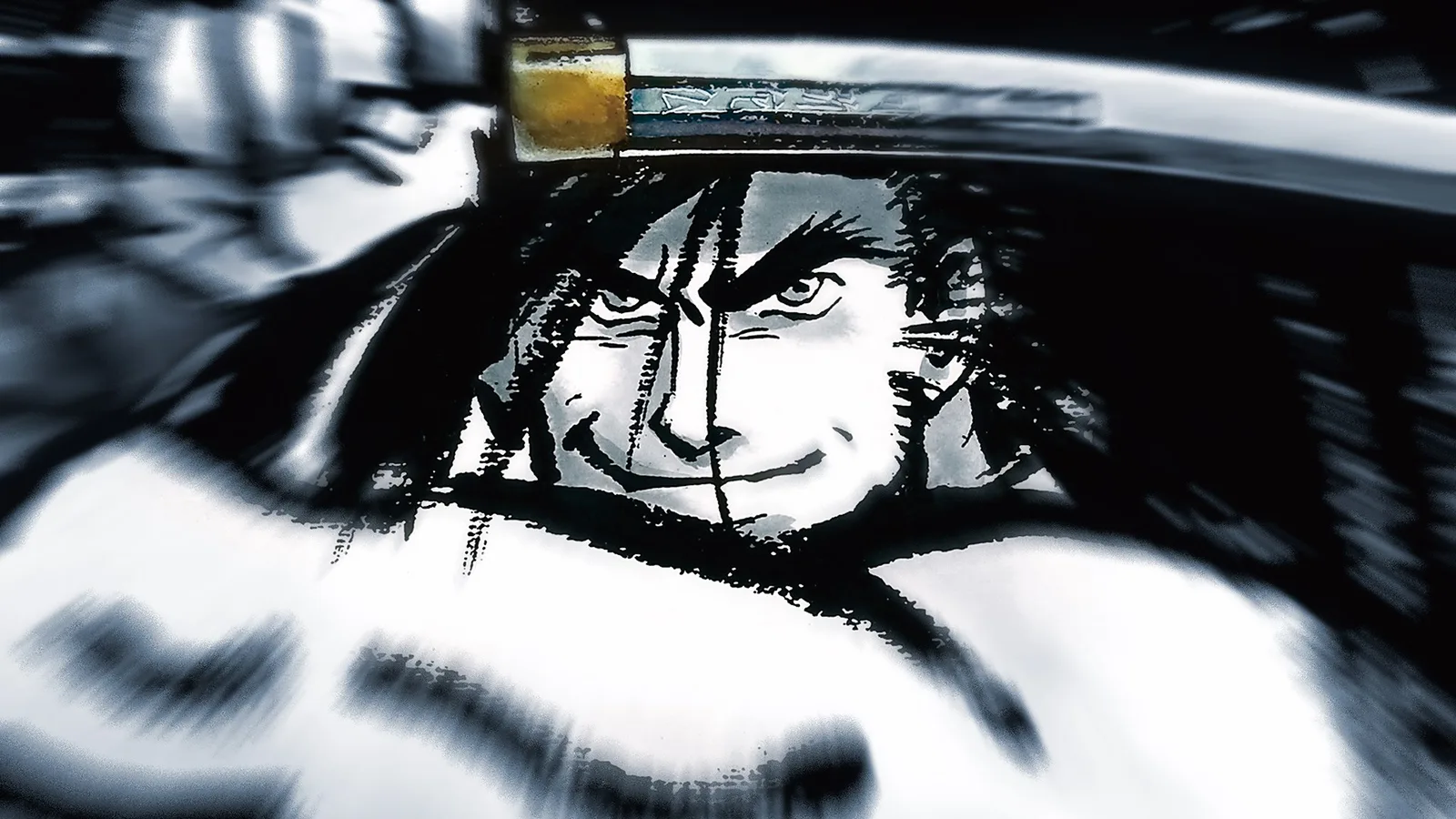
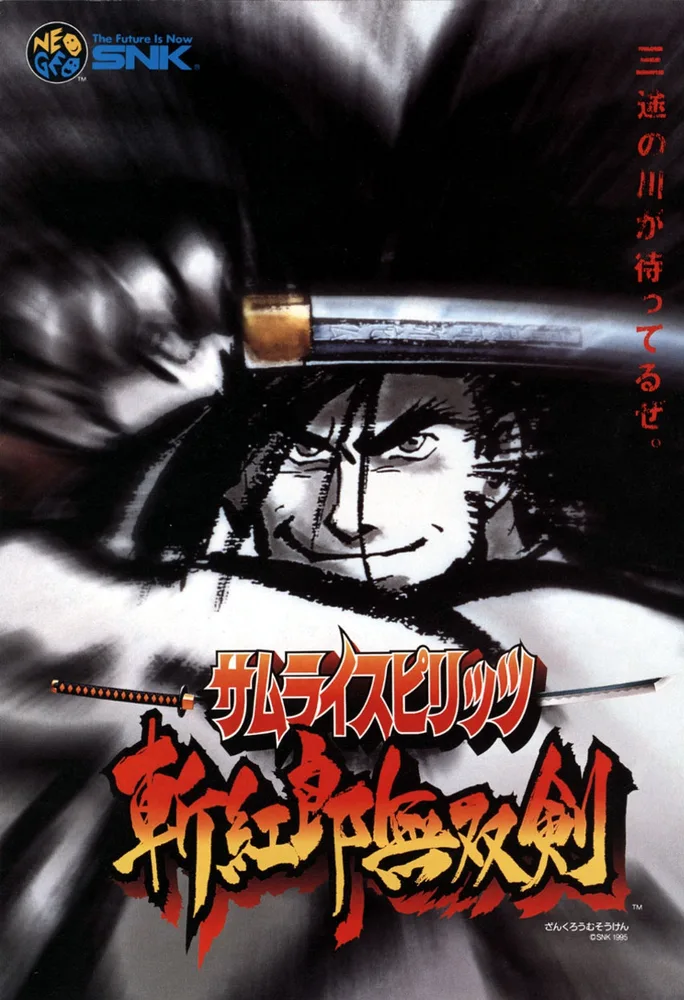
Samurai Shodown III
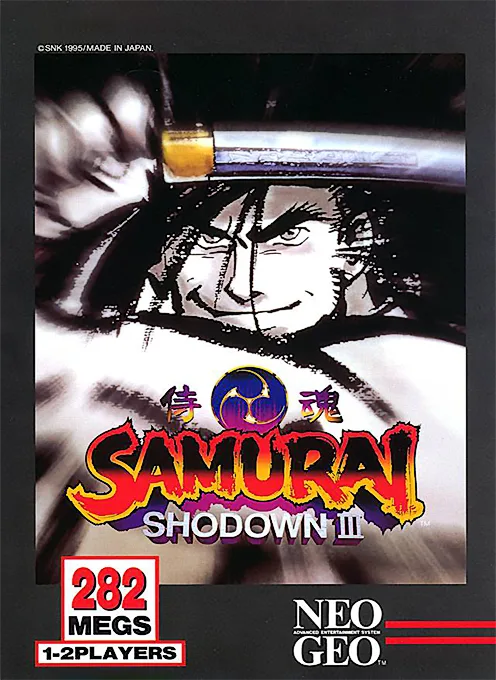
A darker episode that gives each warrior two styles, Slash and Bust, and a graver presentation.
 Get the game
Samurai Shodown III
- Developer
- SNK
- Publisher
- SNK
- Release
- 1995
- System
- Neo Geo
- Players
- 1-2
- Genre
- Fighting game
The story of the game
The why and the how
Samurai Shodown III: Blades of Blood came out on November 15, 1995 in arcades, then on December 1 on Neo Geo AES. SNK developed and published it. The third game in the main series, it is the first of the two chapters of a story set between Samurai Shodown and Samurai Shodown II. It also had versions on Neo Geo CD, PlayStation and Saturn.
How it was made
Eikichi Kawasaki produces the game. The characters were entirely redrawn, and the lightest ones in the series, Earthquake, Cham Cham and Gen-an, are gone. Kyoshiro Senryo, the kabuki master, was redesigned: from an extravagant performer, he became a muscular man with a grave face. Items are now thrown onto the field from off-screen, instead of being brought by the delivery man.
What makes it unique
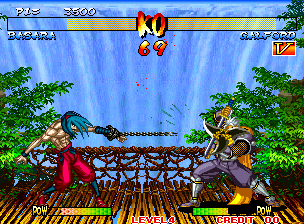
The big novelty is the choice between two versions of each character: Slash (chivalry) and Bust (treachery). Slash stays close to the first two games, Bust is more aggressive and adds new moves. Three of the four buttons are used for weapon attacks, the fourth for kicks. Many basic moves can be canceled into special moves, and the dodge by pressing A and B together replaces a good part of the second game's movement. The darker style and the Slash and Bust system carry over to Samurai Shodown IV. A Game Boy version, with a slightly different cast, came out only in Japan from Takara. The game remains the most divisive of the series, appreciated for its atmosphere and for the depth of its system.
Good to know
The first three buttons correspond to weak, medium and strong sword strikes, and the fourth to kicks. The POW gauge can be recharged with a dedicated command, and super moves require it to be at maximum. Moves marked (W) require having your weapon, and a disarmed player can grab the opponent's sword with bare hands. The tone of the game is darker than previous episodes: the lighter characters have disappeared, and all have been redrawn.
Text written from published sources (Wikipedia, Wikidata, specialist press).
The hardware
Texts and media: ScreenScraper.fr. Trademarks and visuals belong to their owners.