

Shadow Dancer
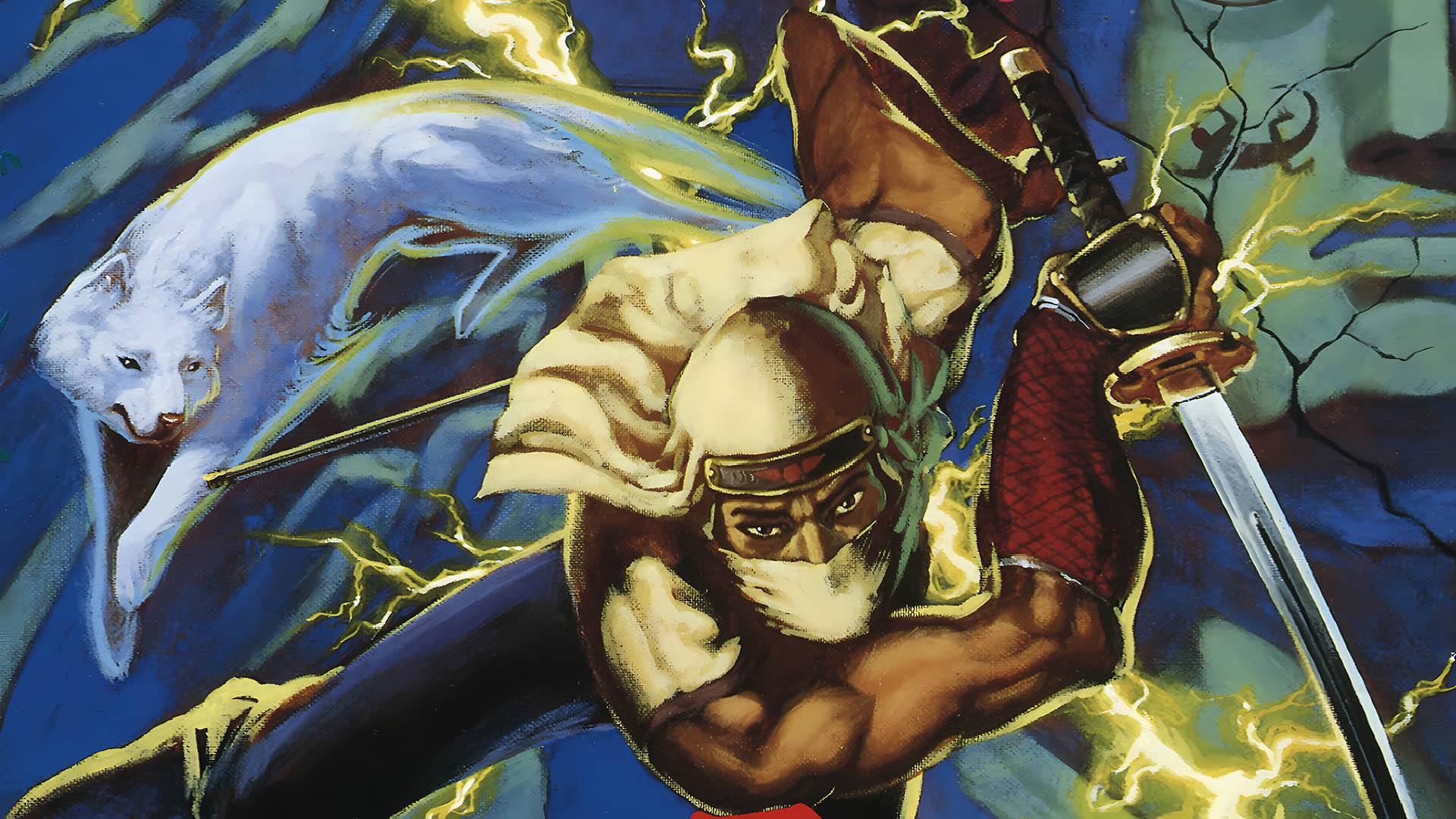
A white-clad ninja, a fighting dog and bombs to defuse all over the city: the arcade sequel to Shinobi, and the first game on Sega's System 18 board.
 Certified scoring
Shadow Dancer
- Developer
- Sega
- Publisher
- Sega
- Release
- 1989
- System
- Arcade
- Players
- 1-2
- Genre
- Action platformer
The story of the game
The why and the how
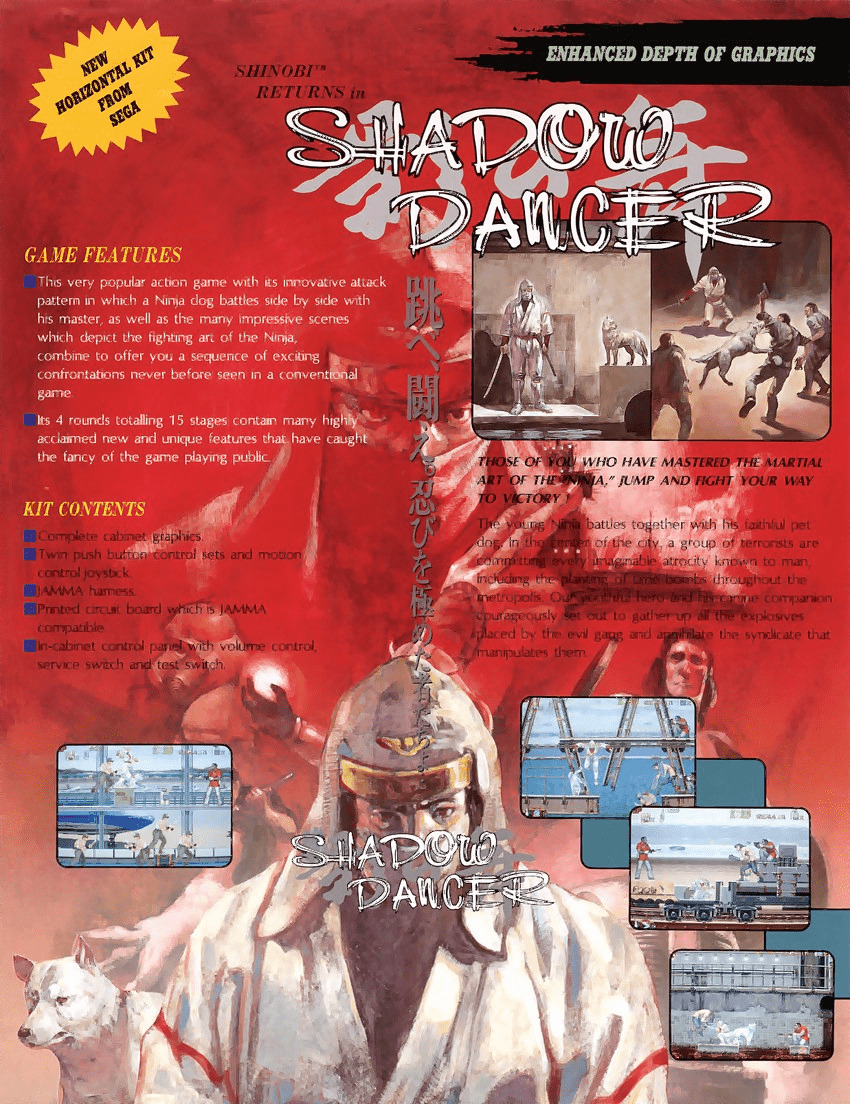
Shadow Dancer reached Japanese arcades in November 1989. Sega developed and published it as the follow-up to Shinobi, its 1987 hit, and made it the first game on its System 18 board. In Japan it carries the subtitle Kage no Mai, the dance of shadows. The story fits in a few lines: in the heart of a big city, a terrorist group has hidden time bombs all over, and a young ninja sets out with his dog to recover them one by one, before going after the organisation pulling the strings. Players followed: in its January 1, 1990 issue, Game Machine magazine ranked it the fourth best-performing table cabinet of the month.
How it was made
Shinobi's creator, Yutaka Sugano, had left for Sega of America. So the Shinobi team within the AM1 division took over under director Motoshige Hokoyama, who chose to rebuild the game from scratch. Yoshiki Ooka, programmer of Gain Ground, wrote the code, and Keisuke Tsukahara composed the music. In the booklet of the Legend of Joe Musashi box set (2009), the composer recalls drawing on the Indonesian pelog and slendro scales, using FM synthesis alone. Roppyaku Tsurumi, a new AM1 recruit at the time, remembers the internal test sessions: department members played it every day, until the future Bonanza Bros. took its place.
What makes it unique
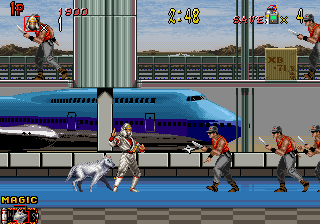
The handling of Shinobi is back: an eight-way joystick, three buttons for attack, jump and magic, unlimited shurikens and a sword for close range. The big addition is Yamato, a white dog who follows the hero step by step. When the ninja crouches, the dog barks; press attack and it leaps at the nearest enemy to pin him down. Wait too long to strike and the wounded animal turns back into a puppy, until a collected bomb, a magic spell or time lets it grow again. Fifteen stages over four missions lead from an airport to a space shuttle launch pad, by way of a train yard and the sewers. Every magic spell triggers a close-up of the hero against a curtain of flames.
Good to know
Shadow Dancer forgives nothing: there is no energy bar, a single hit costs a life, and every stage runs against the clock. Most of the time bombs you defuse are worth 500 or 1,000 points, and collecting half of them turns your shurikens into flaming projectiles until the stage ends or you lose a life. The biggest bonus rewards restraint: clearing a stage in close combat, dog included, without throwing a single star, earns 100,000 points. Between missions, the bonus stage, where you take down ninjas coming down a building, grants an extra life if cleared without a miss. A game starts with three lives, and each continue restores three, with two magic spells instead of one.
Its influence
The game's afterlife mostly played out at home. On the Mega Drive, Sega released Shadow Dancer: The Secret of Shinobi in Japan on December 1, 1990, a free adaptation with entirely different levels. Ports faithful to the arcade arrived in 1991: U.S. Gold and the studio Images converted it for the Amiga, Atari ST, Commodore 64, ZX Spectrum and Amstrad CPC, while a Master System version came out in Europe and Brazil. In Japan, at the 1990 Gamest Awards, the dog ranked 19th among the best characters. The cabinet returned in 2020 in Sega's Astro City Mini, and Yamato reappears in Project X Zone 2, as part of a technique by the ninja Hotsuma.
But the way the main character is drawn on the screen really looked very cool. Particularly during the cut-scene ninja magic sequences.
Text written from published sources (Wikipedia, Wikidata, specialist press).
The hardware
Texts and media: ScreenScraper.fr. Trademarks and visuals belong to their owners.