
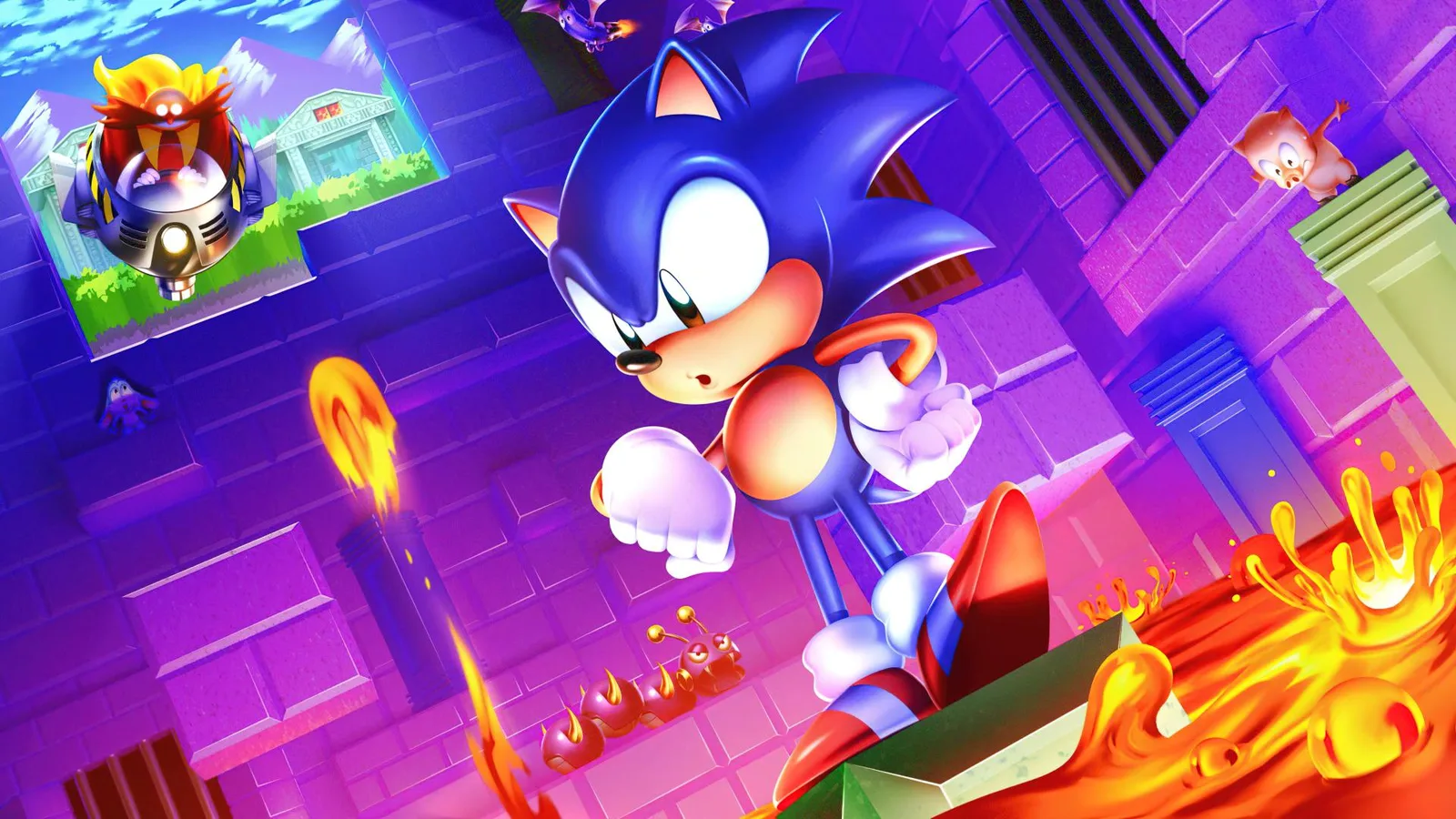

Sonic The Hedgehog
A blue hedgehog, loops at full speed and a single button. The game that gave Sega its mascot and the Mega Drive its ticket to the 16-bit war.
 Certified scoring
 Get the game
Sonic The Hedgehog
- Developer
- Sonic Team
- Publisher
- Sega
- Release
- 1991
- System
- Mega Drive
- Players
- 1
- Genre
- Platform
The story of the game
The why and the how
In the 1980s, Sega had limited success with Genesis ports of its arcade games against Nintendo. In 1988, Sega of Japan began an in-house competition to create a rival to Mario, and in 1990 it ordered its studios to develop a game featuring a mascot for the company. Its president, Hayao Nakayama, wanted a character as iconic as Mickey Mouse. Sonic the Hedgehog was released in North America and PAL regions in June 1991, and in Japan the following month. It was developed by Sonic Team, a team within Sega.
How it was made
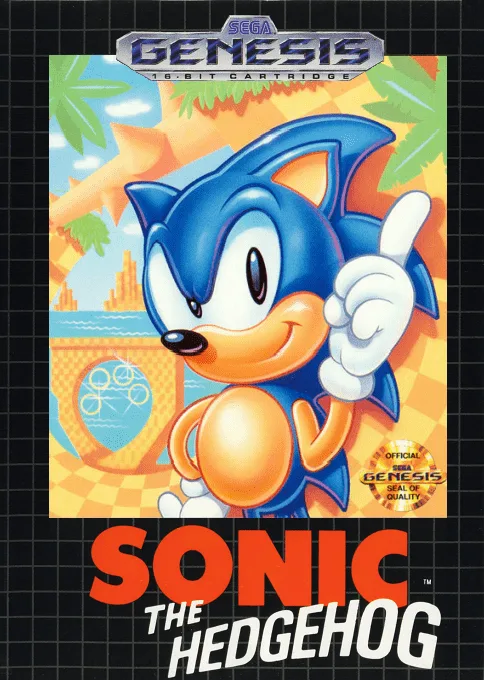
The idea came in November 1989 from character designer Naoto Ohshima, who was working on a project with smooth terrain and loops. The developers looked for a fast animal able to roll into a ball as an attack. The hedgehog proposed by Naoto Ohshima prevailed. Sonic was originally teal, then light blue, then changed to dark blue to stand out against backgrounds and match the Sega logo. Hirokazu Yasuhara designed the levels, Yuji Naka programmed, and Masato Nakamura, bassist of Dreams Come True, composed the music.
What makes it unique
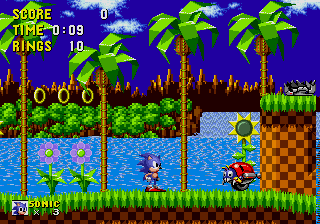
Sonic the Hedgehog is a side-scrolling platform game. The hero must defeat Doctor Robotnik and obtain the six Chaos Emeralds. He runs at high speed through levels with springs, slopes, bottomless pits and vertical loops. His main attack is the spin: by jumping or rolling, he curls into a ball and damages whatever he touches, with a single button for jumping and attacking. Six main zones, each with three acts, end in a fight against Robotnik, before a short Final Zone.
Good to know
Rings act as health: holding one protects Sonic from a single enemy or hazard, and 100 rings grant an extra life. Canisters hold extra rings or temporary invincibility, and signposts act as checkpoints. Reaching the end of Act 1 or 2 with 50 rings makes a large ring appear, opening a bonus stage, a rotating maze where Sonic bounces about as a ball. Each multiple of 50 rings collected there earns continues, but the main goal is the Chaos Emerald hidden in the maze. With all six emeralds, the ending is complete.
Its influence
Sonic the Hedgehog received positive reviews for its visuals, audio and gameplay, and is widely considered one of the greatest video games. It sold over 40 million copies across all platforms, including over 15 million on the Genesis, where it was bundled with the console, making it the best-selling Genesis game. It established the Genesis as a key player in the 16-bit era and made it competitive with the Super NES. Sonic the Hedgehog 2 was released in November 1992.
Text written from published sources (Wikipedia, Wikidata, specialist press).
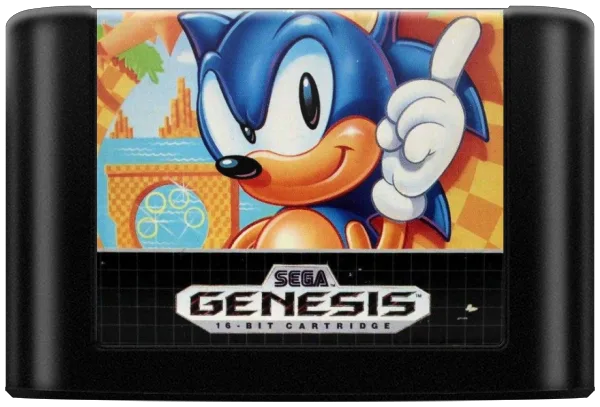
The hardware
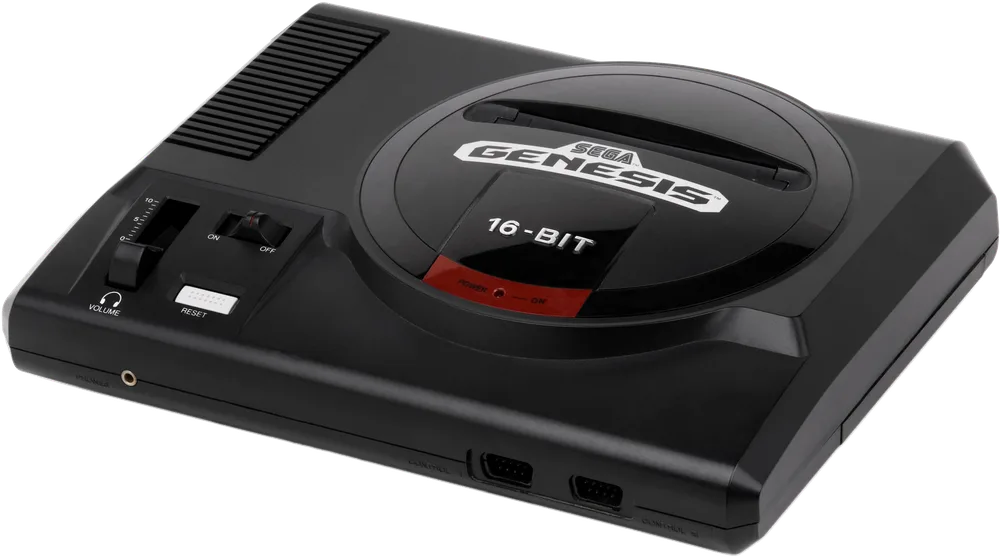
Texts and media: ScreenScraper.fr. Trademarks and visuals belong to their owners.