
Street Fighter
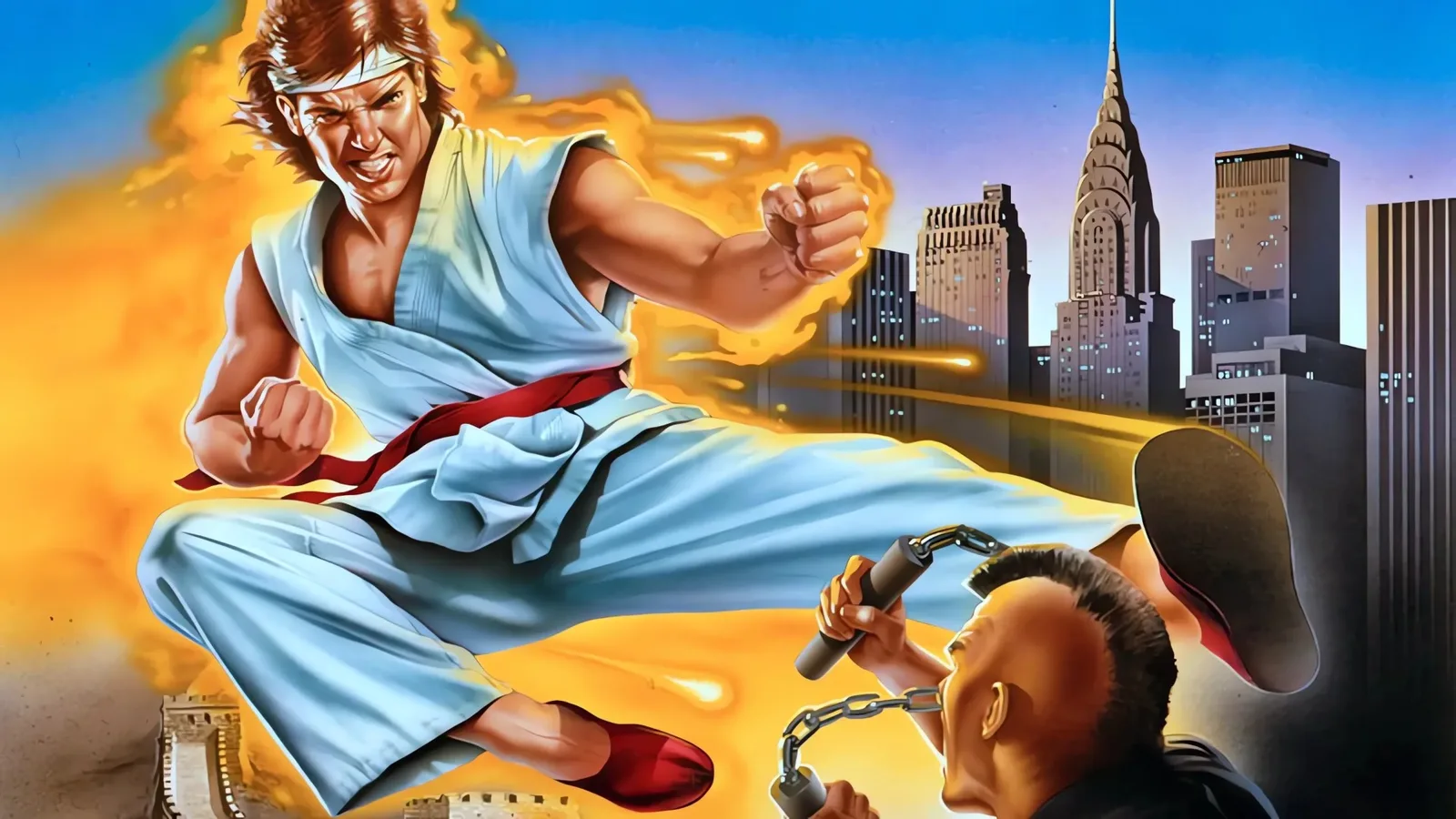
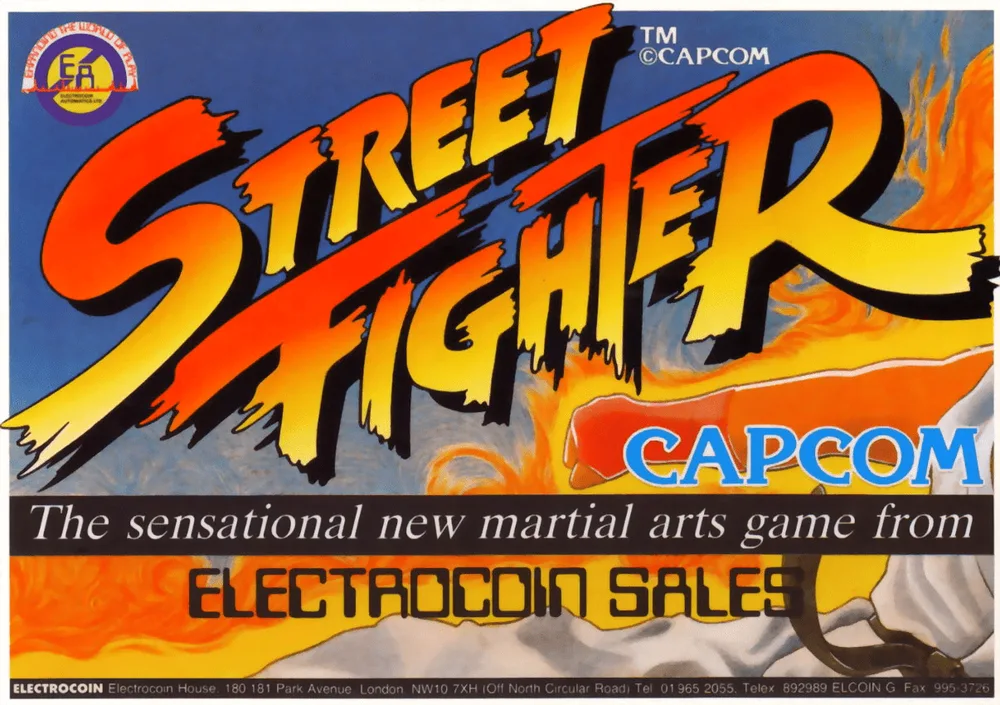
The very first Street Fighter, in 1987: Ryu, Ken, Sagat and their special moves to discover for yourself. The deluxe cabinet's pneumatic pads are remembered, often for their sore wrists.
 Get the game
Street Fighter
- Developer
- Capcom
- Publisher
- Capcom
- Release
- 1987
- System
- Arcade
- Players
- 1-2
- Genre
- Fighting game
The story of the game
The why and the how
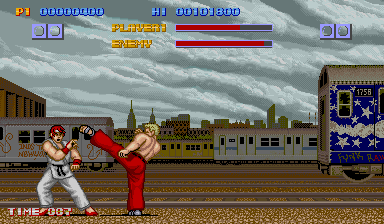
Street Fighter is a fighting game by Capcom released in arcades in 1987, the company's first competitive fighting game and the first installment of the series. It was a great success and introduced special moves along with conventions that became the norm, such as six buttons and grab commands. It is the father of Street Fighter II, released in 1991, but also of Final Fight, originally called Street Fighter '89, and of SNK's Fatal Fury.
How it was made
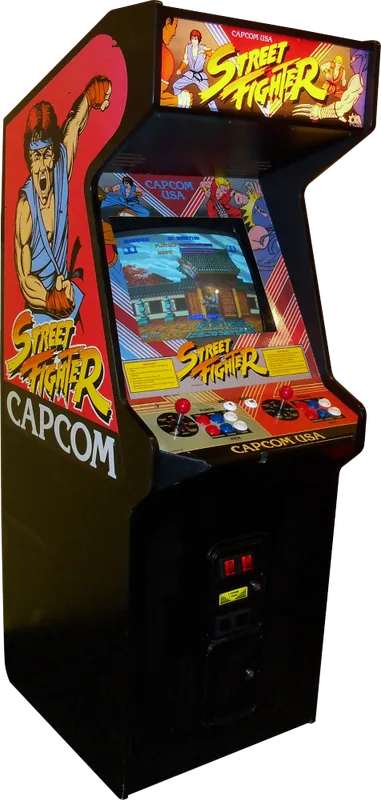
Takashi Nishiyama directs the game, conceived by adapting the boss fights of his earlier beat'em up Kung-Fu Master, with the influence of Japanese shōnen manga. For the deluxe cabinet, designed by Atari Games' Ken Hata at Nishiyama's request, the player has a joystick and two big pneumatic pads, one for punches, the other for kicks, which measure the force of the blow. Maintaining them was complicated, and players sometimes hurt themselves by hitting too hard.
What makes it unique
It pits one player against computer opponents or another player, in matches of three rounds of under 30 seconds. Three special techniques require precise movements: the Hadōken, the Shoryūken and the Tatsumaki Senpū Kyaku. It is the first game to use this principle, and the commands are not shown on the cabinet, to encourage you to discover them yourself. Ryu enters the world tournament and faces ten opponents in five countries, up to Sagat in Thailand.
Good to know
Playing solo, you chain ten fights, first choosing between Japan and the United States, then China and England depending on the setup, before leaving for Thailand. Two bonus mini-games earn extra points: breaking bricks and breaking tables. If a round ends without a K.O., the fighter with the most energy wins, and you can continue against the same opponent after a defeat.
Its influence
A TurboGrafx-CD port came out in 1988 under the name Fighting Street, re-released on the Wii Virtual Console in 2009. The game paved the way for Street Fighter II, whose worldwide success made the series one of the most important in video game history. The final scene already evokes Sagat, defeated by Ryu's Shoryūken and marked with a scar, who vows revenge.
Text written from published sources (Wikipedia, Wikidata, specialist press).
The hardware
Texts and media: ScreenScraper.fr. Trademarks and visuals belong to their owners.