
Super Mario Bros. 3
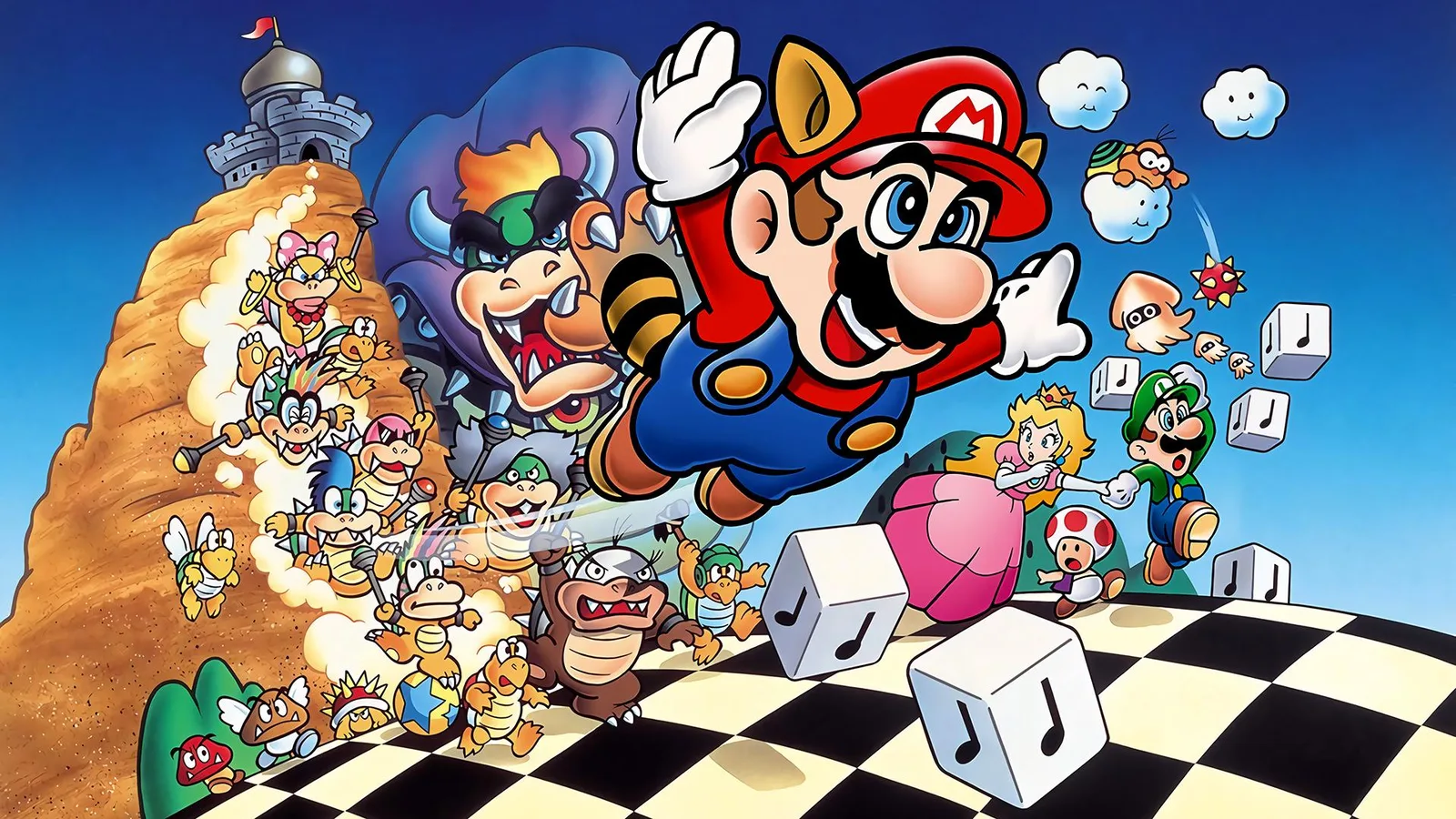
Mario takes flight with the raccoon leaf and crosses eight kingdoms on a world map. The third Mario on the NES, often cited as the greatest game on the console.

Super Mario Bros. 3
- Developer
- Nintendo R&D4
- Publisher
- Nintendo
- Release
- 1988
- System
- NES
- Players
- 1-2
- Genre
- Platform
The story of the game
The why and the how
Super Mario Bros. 3 was released in Japan on October 23, 1988 for the Famicom, in North America on February 12, 1990 and in Europe on August 29, 1991. Nintendo developed it under the direction of Shigeru Miyamoto and Takashi Tezuka. Mario, or Luigi in two-player mode, must save Princess Toadstool and the rulers of seven kingdoms from Bowser. In the United States, audiences first saw it in the final scene of the 1989 film The Wizard, before its release.
How it was made
The Super Mario Bros. team returned: Shigeru Miyamoto produced and directed alongside Takashi Tezuka, Toshihiko Nakago programmed and Koji Kondo composed the music. The designers included Katsuya Eguchi, Hideki Konno and Kensuke Tanabe. The game introduced what became series staples: the world map linking the levels, and Bowser's children, the Koopalings.
What makes it unique
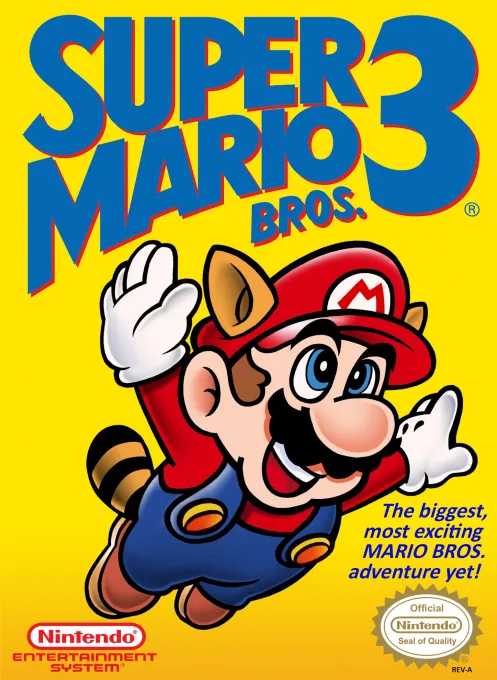
You run, jump and, for the first time, slide down slopes, carry items and climb vines. The Super Leaf turns Mario into a raccoon: he glides, and takes flight after a running start. The Tanooki suit, the frog suit and the hammer suit each change how you play. Each world's map holds Toad houses, mini-games and fortresses between the levels, and every world ends on a Koopaling's airship.
Good to know
At the end of a level, a card spins: mushroom, flower or star. Three matching cards give extra lives, up to five with three stars. Items you win go into a reserve and are used from the world map, before entering a level. Hidden whistles, the first one in World 1-3 by crouching on a white block, send you to faraway worlds. On NelfePlay, the World 1 speedruns start at the entrance of each level, from a fresh game.
Its influence
Praised for its well-judged challenge, it ranks among the greatest video games and is often called the best on the NES. With more than 17 million copies sold, it is the third best-selling NES game. It inspired an animated series and returned in 1993 in Super Mario All-Stars on the Super NES, in 2003 on the Game Boy Advance as Super Mario Advance 4, then on Wii, Wii U, 3DS and Switch.
Text written from published sources (Wikipedia, Wikidata, specialist press).
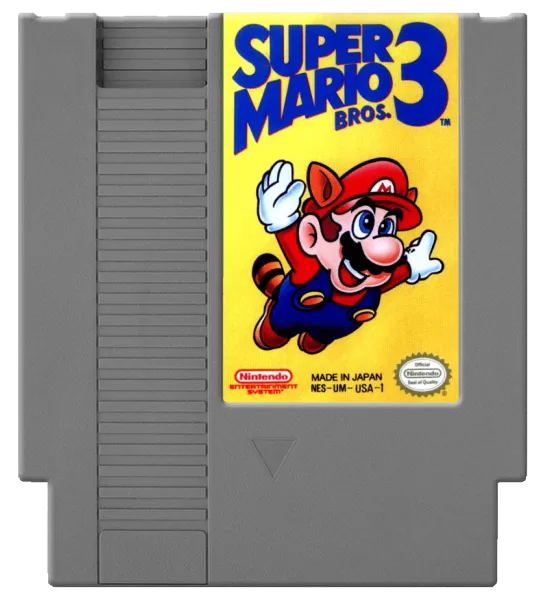
The hardware
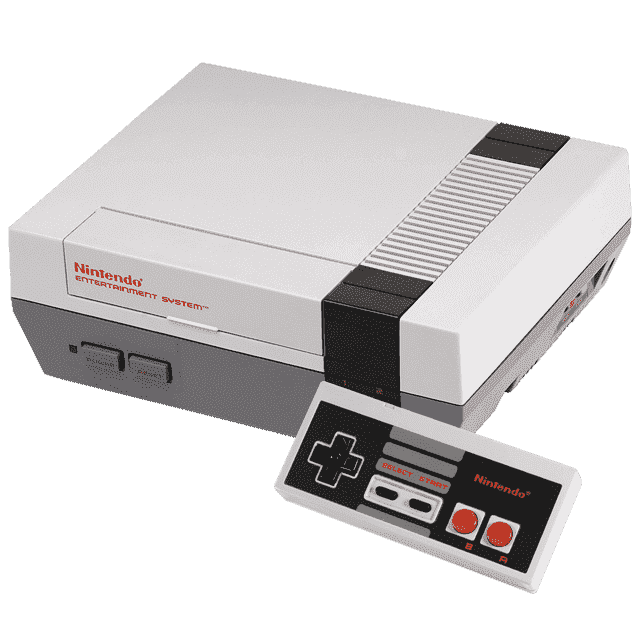
Texts and media: ScreenScraper.fr. Trademarks and visuals belong to their owners.