
Super Mario Kart
Born from a multiplayer prototype of F-Zero, it became the game that invented video game kart racing. Mode 7, battle mode and coins to collect.
Super Mario Kart
- Developer
- Nintendo EAD
- Publisher
- Nintendo
- Release
- 1992
- System
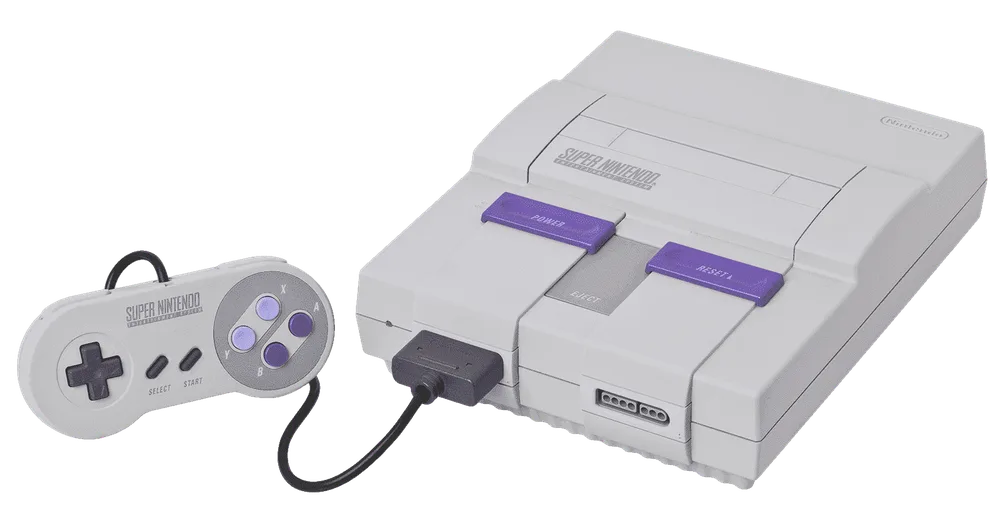
- Super Nintendo
- Players
- 1-2
- Genre
- Kart racing
The story of the game
The why and the how
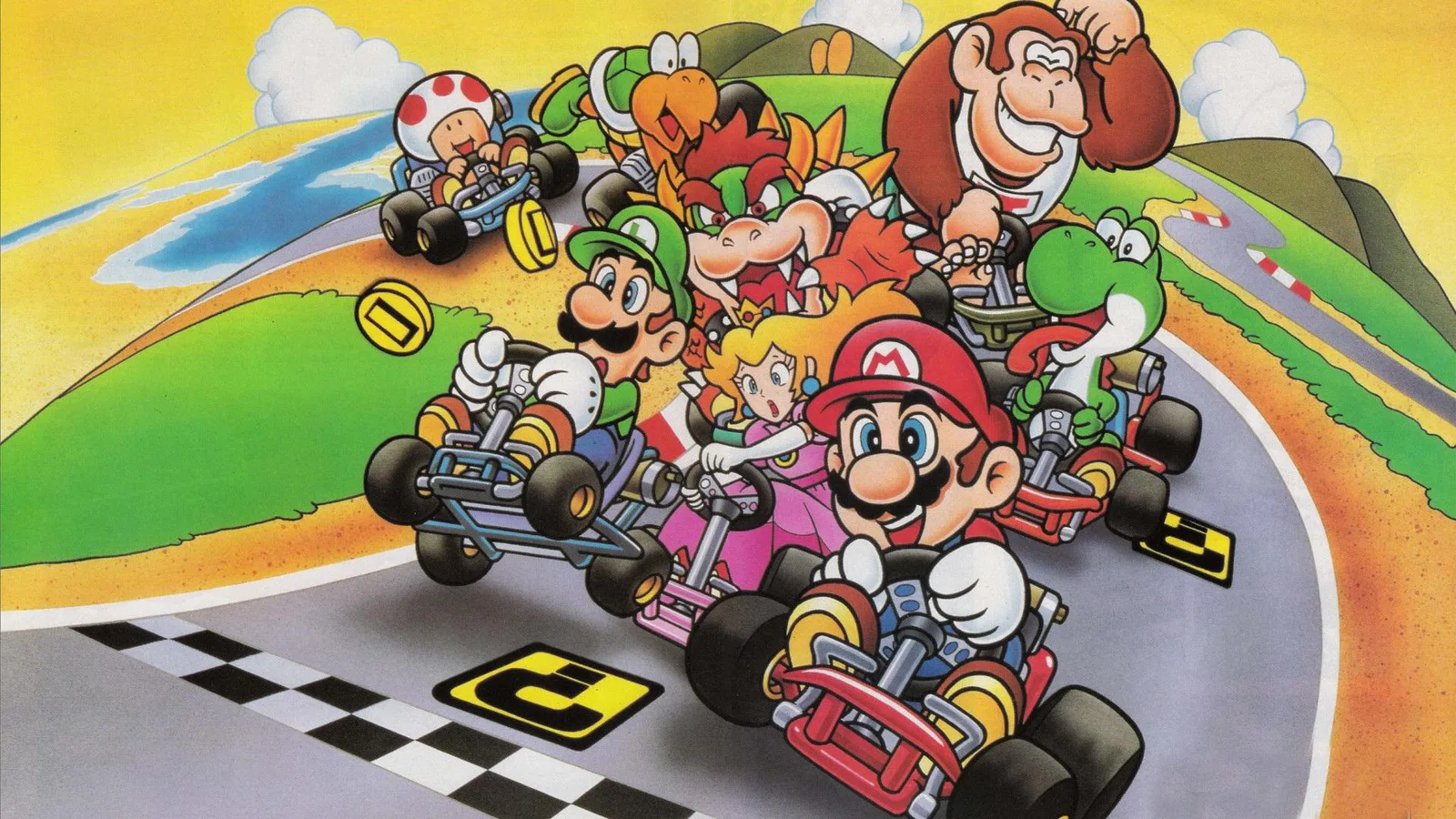
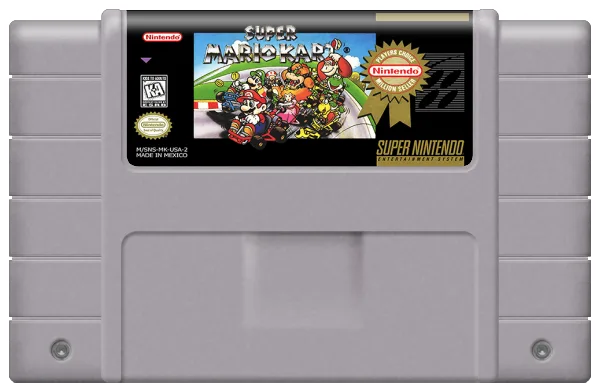
Super Mario Kart is a 1992 kart racing game developed and published by Nintendo for the Super Nintendo. The first game in the Mario Kart series, it was released in Japan on August 27, 1992, North America on September 1, 1992 and Europe on January 21, 1993. Selling 8.76 million copies worldwide, the game became the fourth best-selling SNES game of all time. It was re-released on the Wii's Virtual Console in 2009 and the Wii U's Virtual Console in 2013. The player takes control of one of eight Mario series characters, each with differing capabilities.
How it was made
Super Mario Kart was produced by Shigeru Miyamoto and directed by Tadashi Sugiyama and Hideki Konno. It began as a multiplayer prototype of the 1990 SNES game F-Zero, with F-Zero programmer Masato Kimura as lead programmer. The team aimed to produce a racing game capable of displaying two players on the same screen, which led to simpler tracks than those of F-Zero. Mario characters were not incorporated until a few months into development, when the team saw how Mario looked in a kart. Soyo Oka composed the music. Mode 7, first seen in F-Zero, gave the game graphics considered breathtaking at the time.
What makes it unique
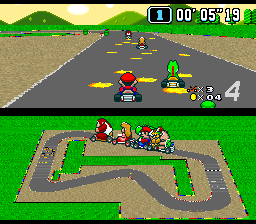
In single-player mode, players can race against computer-controlled characters in 4 multi-race cups consisting of 20 tracks, 5 in each cup, over three difficulty levels: 50cc, 100cc and 150cc. During the races, offensive and speed-boosting power-ups can be used to gain an advantage. Alternatively, players can race against the clock in a Time Trial mode. To begin, Lakitu appears with a traffic light hanging on his fishing pole. Power sliding allows a kart to maintain its speed while turning, and hopping helps it execute tighter turns. Reviewers also praised the battle mode.
Good to know
In the races, coins are collected, and they are lost when karts are struck by power-ups or fall off the tracks. Coins therefore count as a resource to protect. Battle Mode was developed from the desire to create a one-on-one mode where victory was not determined simply by competing for rank. The team aimed at two players on the same screen, which Computer and Video Games suggests is the reason for the game's horizontal split-screen during single-player.
Its influence
Super Mario Kart received critical acclaim and proved to be a commercial success, receiving a Player's Choice release after selling one million copies. It was praised for its presentation, innovation and use of Mode 7 graphics, and has been ranked among the greatest video games of all time by several magazines and organizations. It is often credited with creating the kart-racing subgenre, leading other developers to try to duplicate its success. It is also seen as having been key to expanding the Mario series into non-platforming games.
Text written from published sources (Wikipedia, Wikidata, specialist press).
The hardware
Texts and media: ScreenScraper.fr. Trademarks and visuals belong to their owners.