
Super Mario World
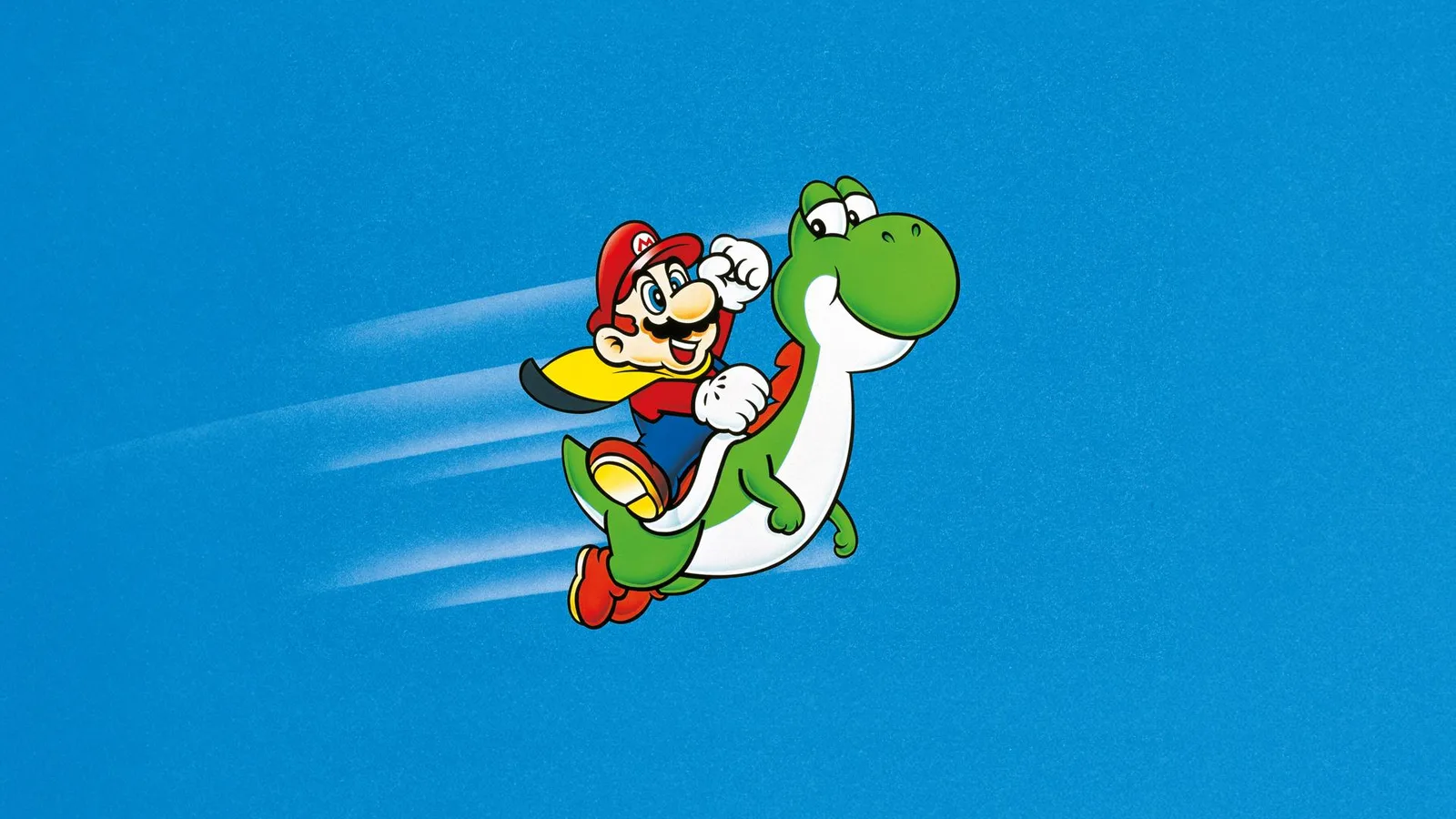
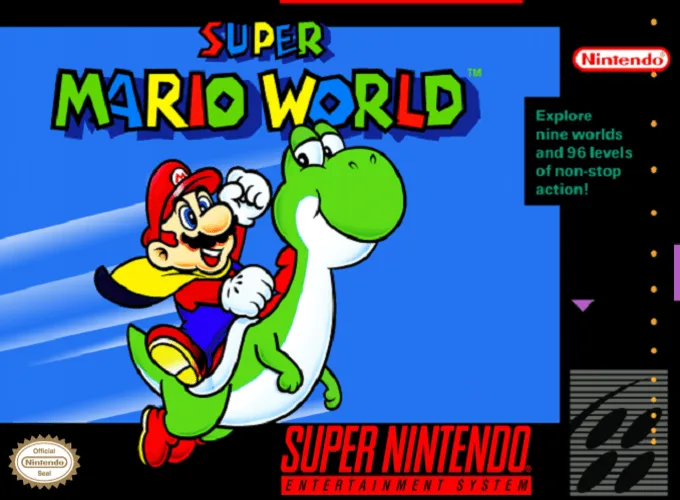
Mario meets Yoshi and crosses Dinosaur Land with a cape on his back. The first Mario on the Super Nintendo, and the console's best-selling game.

Super Mario World
- Developer
- Nintendo EAD
- Publisher
- Nintendo
- Release
- 1990
- System
- Super Nintendo
- Players
- 1-2
- Genre
- Platform
The story of the game
The why and the how
Super Mario World was released in Japan on November 21, 1990, alongside the Super Famicom, then in North America on August 23, 1991 and in Europe in 1992. In Japan it carries the subtitle Super Mario Bros. 4. Mario, or Luigi in two-player mode, must save the princess and Dinosaur Land from Bowser and the Koopalings.
How it was made
Nintendo EAD developed it, directed by Takashi Tezuka and produced by Shigeru Miyamoto. Toshihiko Nakago programmed it, Koji Kondo composed the music, and Katsuya Eguchi and Hideki Konno designed it. As the first Mario on the Super Nintendo, it was built to make the most of the console, and the team had more freedom than on the NES. Yoshi, imagined back in the NES days, could not appear there because of the hardware's limits.
What makes it unique
You guide Mario to the goal post at the end of each level. Yoshi, the dinosaur you ride, swallows enemies and spits some of them back out. The cape lets you glide and fly, and a reserve box keeps an item aside to drop it at the right moment. A map links the levels, many of which hide a second exit that opens new paths: the game has 96 exits.
Good to know
The height at which Mario breaks the goal tape earns bonus stars; at 100, a bonus game opens. Five Yoshi coins in one level give an extra life. The midway gate lets you restart halfway through the level after losing a life. Secret exits lead to the Star Road and its shortcuts. On NelfePlay, the speedruns start at the opening of each level, with small Mario and no Yoshi, up to the goal tape.
Its influence
Often cited among the best games in the series and among the greatest video games, it sold more than 20 million copies and remains the best-selling Super Nintendo game. It inspired an animated series and a 1995 prequel, Yoshi's Island. It returned in 1994 in Super Mario All-Stars + Super Mario World, in 2001 on the Game Boy Advance as Super Mario Advance 2, then on Wii, Wii U, New 3DS, the Super NES Classic Edition and Switch.
Text written from published sources (Wikipedia, Wikidata, specialist press).
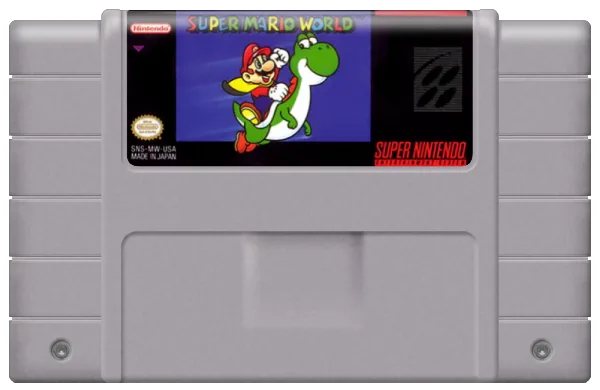
The hardware
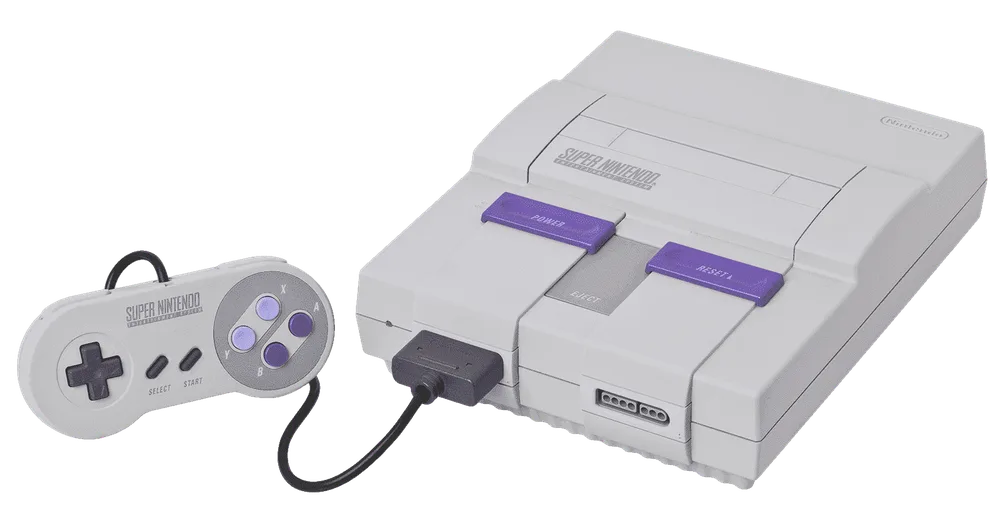
Texts and media: ScreenScraper.fr. Trademarks and visuals belong to their owners.