
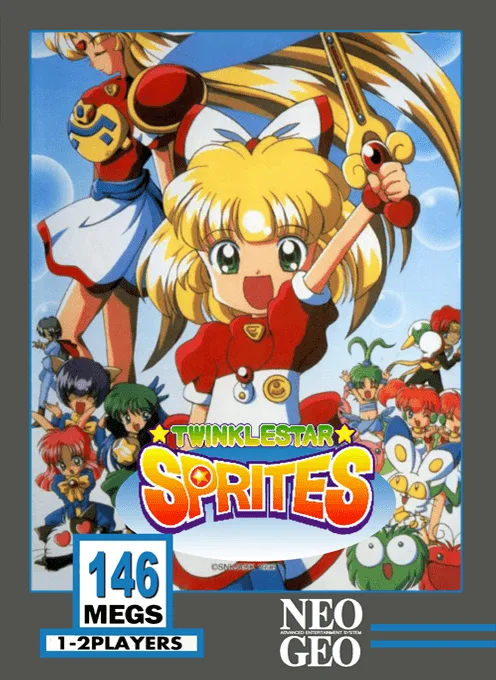
TWINKLE STAR SPRITES
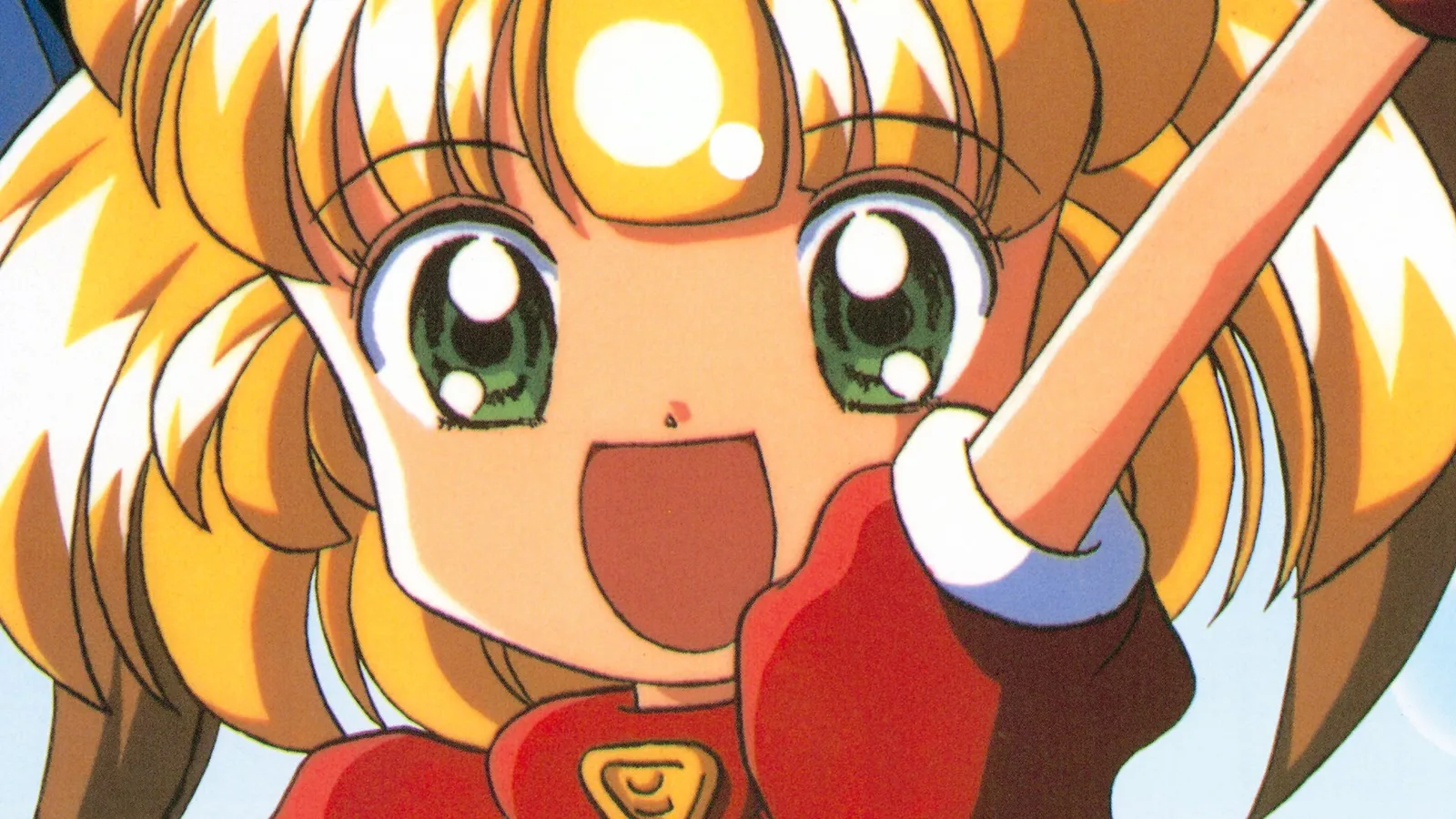
A head-to-head shoot'em up with two screens side by side, where every well-placed chain turns against your opponent. ADK's last gift to the Neo Geo, colorful, nervy and highly replayable with two players.
 Get the game
TWINKLE STAR SPRITES
- Developer
- ADK
- Publisher
- SNK
- Release
- 1996
- System
- Neo Geo
- Players
- 1-2
- Genre
- Head-to-head vertically scrolling shoot'em up
The story of the game
The why and the how
Twinkle Star Sprites came out in Japanese arcades on 25 November 1996. It was developed by ADK and published by SNK on Neo Geo, and remains ADK's last production for that machine. Instead of a classic shooter, the game offers a clash between two players, each in their own vertically scrolling level. It did not win over the critics, but it found a loyal audience, even ranking fourteenth among the most popular arcade games in Game Machine's chart in early 1997.
How it was made
The starting point was a duel: from the outset, the ADK team wanted a shoot'em up in which two players measure themselves directly, instead of comparing scores. Yoshiyasu Matsushita is credited with the design, Shoji Aomatsu with the programming and balancing, Mimori Fujinomiya with the characters. The split screen was settled on because the Neo Geo does not handle vertical orientation. The explosion chain system came out of a great many trials: a first version, in which you filled a gauge, did not work, because testers never filled it. In Load Ran, Fujinomiya wanted a heroine at the opposite end from magical girls, hence her companion Rabbicat.
What makes it unique
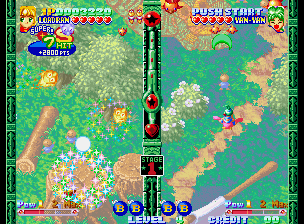
A vertical bar separates the two fields, which are independent of each other. Enemies arrive from the top, and you must destroy them in chains to send fireballs to your opponent. Sending them back several times turns them into a reversed attack, then into indestructible enemies. A three-level power gauge allows charged shots specific to each character, extra attacks and a boss attack. Each player has five hit points. If the round drags on, an enemy named Death appears and kills instantly.
Good to know
Everything rests on combos. Destroying just one enemy of a formation, then sweeping up the rest in a single chain, triggers a Perfect: bonus points, a gauge that fills faster, accelerated attacks toward your opponent and faster enemies on their side. When the internal countdown reaches zero, a special formation appears, sometimes with a blue orb that starts Fever mode: chains then produce far more attacks. Scoring therefore means building long chains without getting hit.
Its influence
The game had a fine career on consoles: Neo Geo AES and Neo Geo CD in early 1997, then a Saturn version by ADK, with an animated introduction, a new character and a bonus disc. After SNK bought ADK's rights, an improved version came out on Dreamcast in 2000. In 2005, a 3D sequel, La Petite Princesse, was shown at E3. DotEmu's versions followed in 2015 and 2016, on Steam and GOG.com.
There was actually a great deal of trial and error before we settled on the “chain explosion” system.
Text written from published sources (Wikipedia, Wikidata, specialist press).
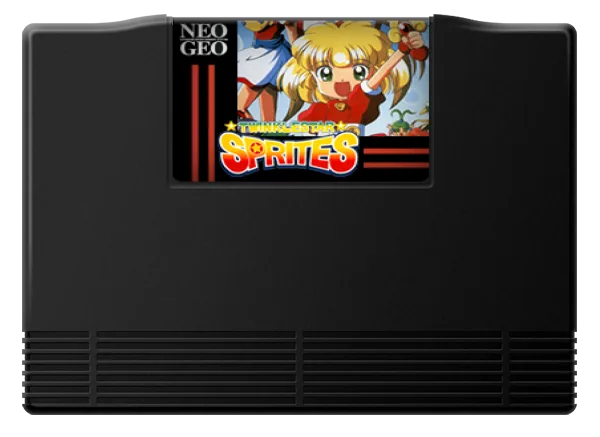
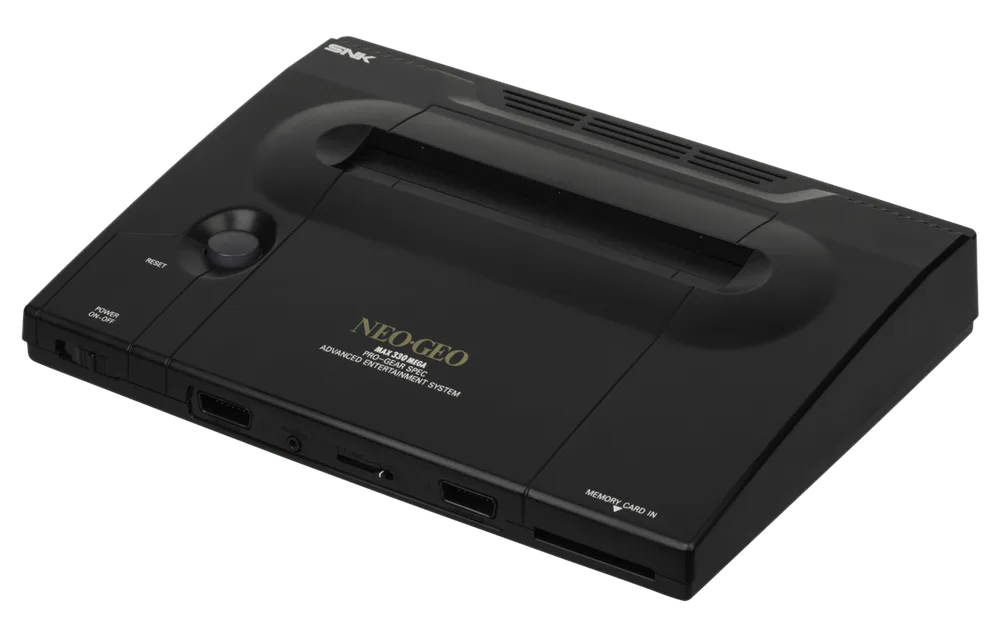
The hardware
Texts and media: ScreenScraper.fr. Trademarks and visuals belong to their owners.