
X-Men
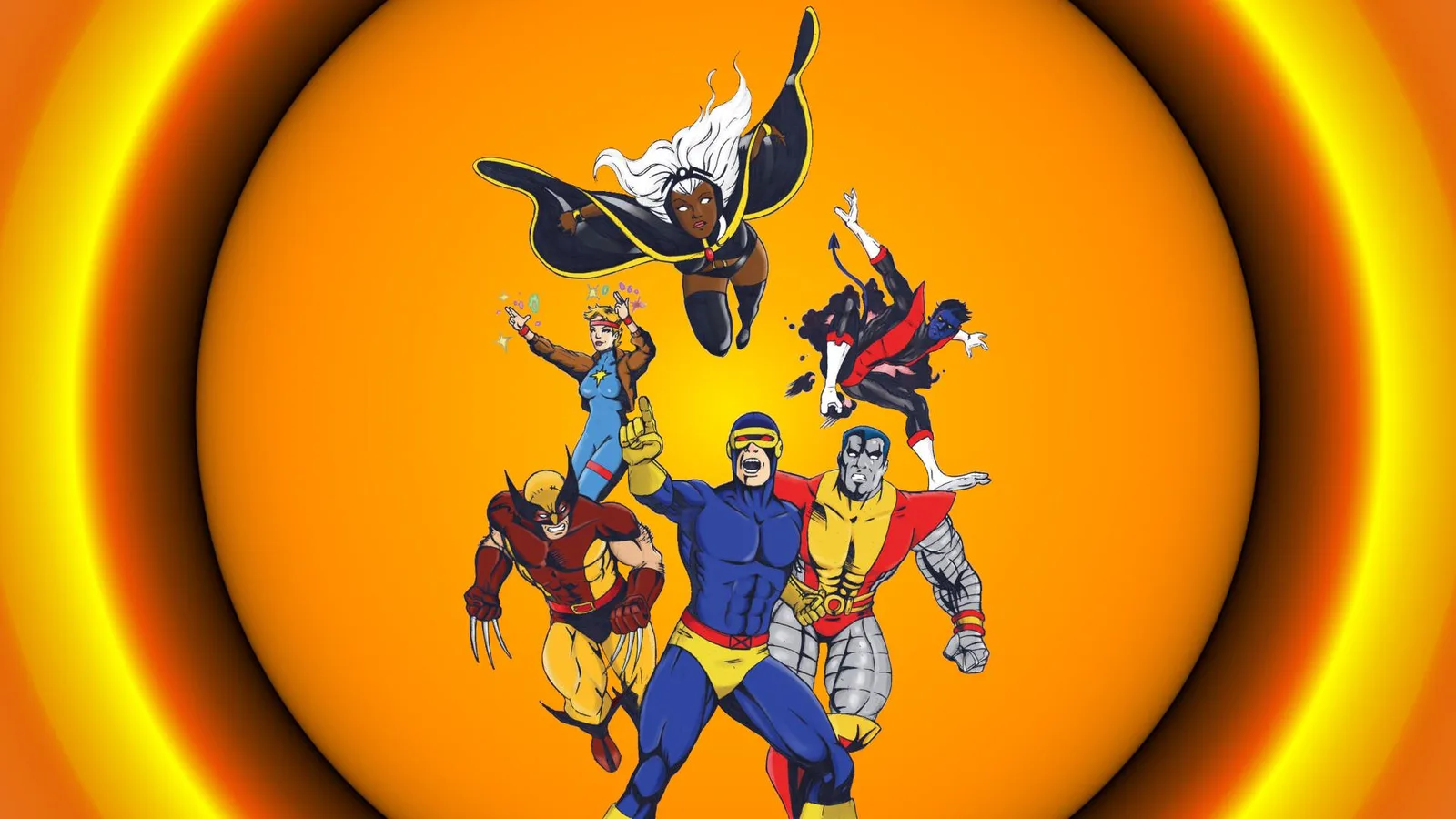
Six mutants, up to six players and a giant double screen: Konami's X-Men cabinet remains one of the most striking sights of 1990s arcades. And Colossus's roar still makes MAGFest shake.
 Get the game
X-Men
- Developer
- Konami
- Publisher
- Konami
- Release
- 1992
- System
- Arcade
- Players
- 1-6
- Genre
- Beat'em up
The story of the game
The why and the how
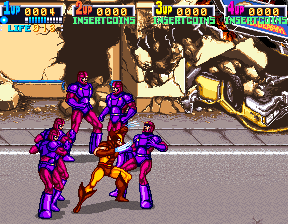
X-Men is a beat'em up developed and published by Konami in arcades in 1992. It draws on Marvel Comics' team of superheroes, with characters drawn after the 1989 television pilot, X-Men: Pryde of the X-Men. The game was one of the five most profitable dedicated arcade games in the United States in 1992, and the AMOA nominated it in the category of most innovative new technology. In Japan, Game Machine ranked it third among tabletop cabinets in August 1992.
How it was made
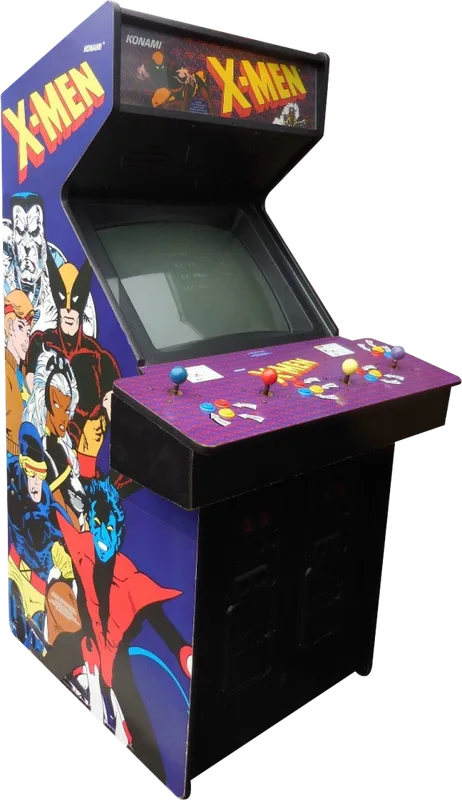
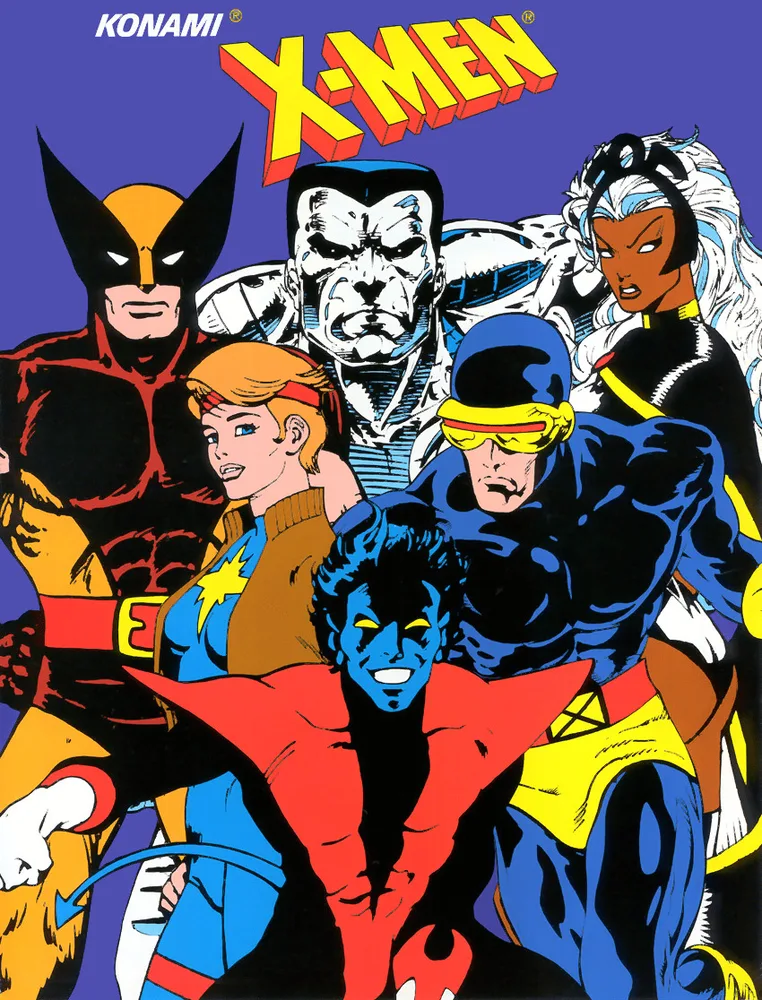
Konami's cabinet draws on the pilot episode of the 1989 X-Men cartoon, Pryde of the X-Men, from which it takes the look of the characters and a good part of the story. C. Lee directs and produces, assisted by Hideki Ohyama on direction and Masahiro Inoue on production. Hiroshi Matsuura and S. Yasuda program. The music is by Seiichi Fukami, Yuji Takenouchi and Junya Nakano. The six-player version uses two screens side by side, the lower one mirrored. In the United States, it was one of the five highest-earning arcade games of 1992.
What makes it unique
You choose among Cyclops, Colossus, Wolverine, Storm, Nightcrawler and Dazzler to face Magneto, his Sentinels, the Reavers, Pyro, Blob, Juggernaut or Mystique. When Magneto abducts Professor X and Kitty Pryde, the mission leads all the way to Asteroid M. Depending on the machine, you play from two to six: the six-player version joins two adjoining screens, one in the cabinet, the other reflected by a mirror, to form a giant screen.
Good to know
The game is played with a joystick and an attack button, a jump button and a mutant power button. Each hero has a power of his own that hits several enemies at once, but using it costs three life points, and a character under four life points can no longer use it. In the Japanese version, powers in reserve are consumed before health, with bonuses and heals scattered through the levels.
Its influence
Long exclusive to the arcade, the game came out in 2010 on PlayStation 3 and Xbox 360, with online play for up to six players, then on mobile in 2011 before being pulled from sale in 2013. It was offered in an Arcade1Up cabinet in 2021 and in the Marvel MaXimum Collection in 2026, with online play. At MAGFest, tradition has it that the crowd imitates Colossus's roar, as composer Nobuo Uematsu did in 2012.
Text written from published sources (Wikipedia, Wikidata, specialist press).
The hardware
Texts and media: ScreenScraper.fr. Trademarks and visuals belong to their owners.